Soviet Medium Format Cameras Explained: Plants and Brands
In this article the team of Sovietcameras.org will tell you about all significant Soviet medium format cameras.

Soviet Medium Format Cameras: Overview
Quite a large number of medium format cameras were produced in Soviet times, but in this article we focus on the most interesting Soviet medium format cameras that can still be bought and used today.
We have deliberately left out models that are uninteresting, difficult to find, or simply impractical to use now.
There were several factories that produced Soviet medium format cameras and the most interesting of them are:
Each of these brands focused on a specific segment of medium format film cameras and had very little overlap with the others.
So, let’s take a closer look at each plant and find out which Soviet medium format cameras they produced.
KMZ Medium Format Cameras
The KMZ factory produced folding medium-format Soviet rangefinder cameras, mainly with 6×9 cm and 6×6 cm frame sizes.
At KMZ, they were among the first in the USSR to start producing (to be more precise, copying from German models) Medium format film cameras.
The very first were Moskva folding medium format cameras with a frame size of 6x9cm, which were clones of the German medium format Zeiss Ikonta.
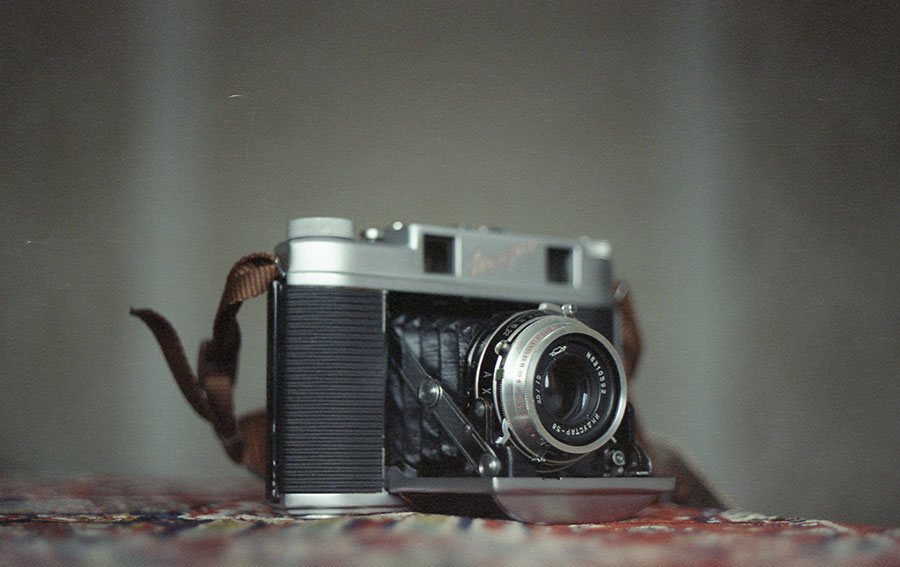
Moskva-1
The Moskva-1 is a medium format scale-focus camera, meaning it does not have a built-in rangefinder or ground glass. Focusing is done using the distance scale on the lens barrel.
The camera is equipped with a very solid Industar-23 4.5/110 lens, capable of producing excellent images with good sharpness and pleasing bokeh. The Moskva-1 also featured a high-quality shutter for its time, offering shutter speeds from 1 to 1/250 second.
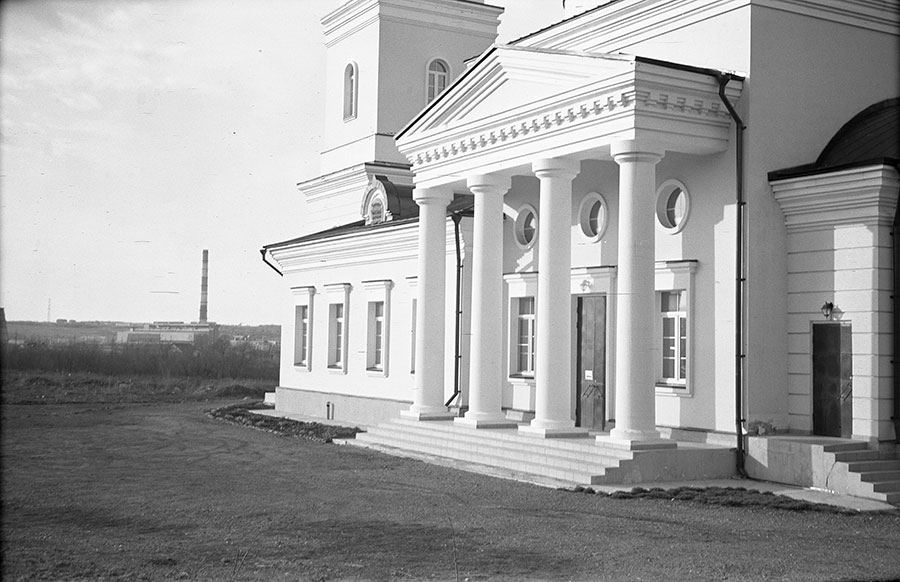
Moskva-2
The Moskva-2 was also a clone of the German Zeiss Ikonta, but it had a major advantage over the first model in the form of a built-in rangefinder.
This feature greatly simplified and sped up the shooting process, as there was no longer a need to estimate distances or use external rangefinders.
Moskva-4
The Moskva-4 medium format film camera is essentially an improved version of the Moskva-2. Unlike the second model, the Moskva-4 allows you to shoot not only in the 6×9 format but also in 6×6.
On 120 film, it produces 8 frames in 6×9 format and 12 frames in 6×6 format. In other respects, the Moskva-4 differs very little from the second model.

Moskva-5
The Moskva-5 medium format Soviet camera differed more noticeably from the earlier models. It featured a more convenient viewfinder with the ability to switch between formats.
The Industar-23 lens was replaced with the Industar-24, with an f/3.5 aperture and a focal length of 105 mm.
Iskra
Iskra is the best Soviet folding medium format camera in the opinion of our team. This camera combines everything a folding camera could offer at its best.
The Iskra features a large, bright viewfinder, a convenient focusing system, a frame counter, a sharp and attractive lens with pleasing bokeh, a solid range of shutter speeds, and several other well-thought-out details.
Iskra-2
The Iskra-2 camera is essentially the first Iskra model with a built-in selenium light meter. As with the original version, this camera offers a wide range of features that allow you to produce high-quality photographs and fully enjoy the shooting process.
Arsenal Medium Format Cameras
The Arsenal plant specialized in producing higher-end, more advanced cameras aimed at professional photographers. This factory produced two types of 6×6 SLR cameras.
The first type is the Kiev-6c and Kiev-60 cameras, which had the appearance and control elements of a conventional 136mm film camera and were clones of Pentacon Six cameras.
The second type is the Hasselblad clones, which, although they did not have the same build quality as the Swedish original, produced excellent photo quality.
Kiev-6С
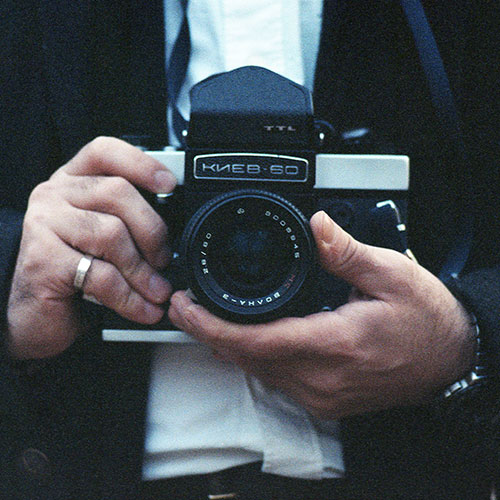
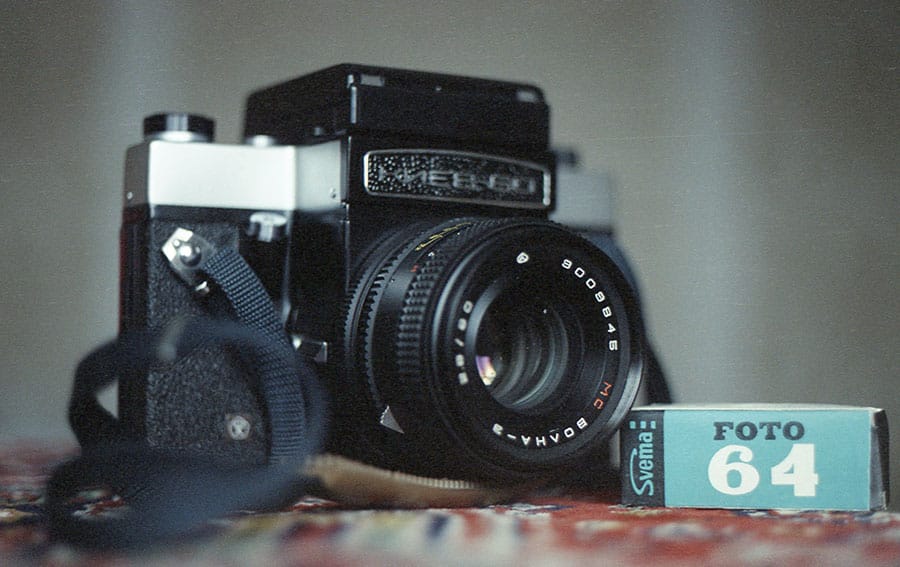
The Kiev-6C camera was the first Soviet clone of the German Pentacon Six. It featured a wide range of shutter speeds, a very convenient frame counter, and an excellent selection of lenses. The main drawback of the camera was the placement of the shutter release button to the right of the lens.

Kiev-60
In the Kiev-60, this drawback was corrected, and the shutter release button was moved to its usual position to the left of the lens. The camera retained all the advantages of the previous model. According to our team, it is one of the best Soviet medium format cameras.
Salut
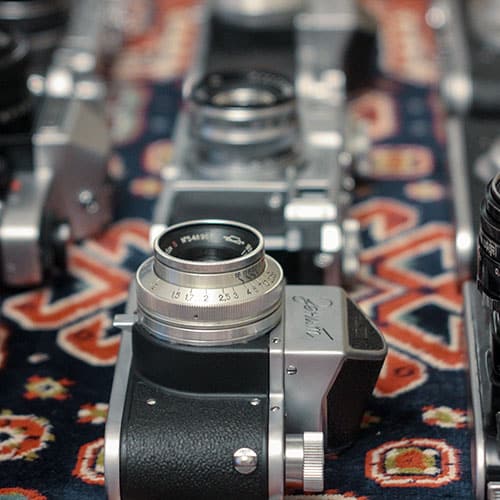
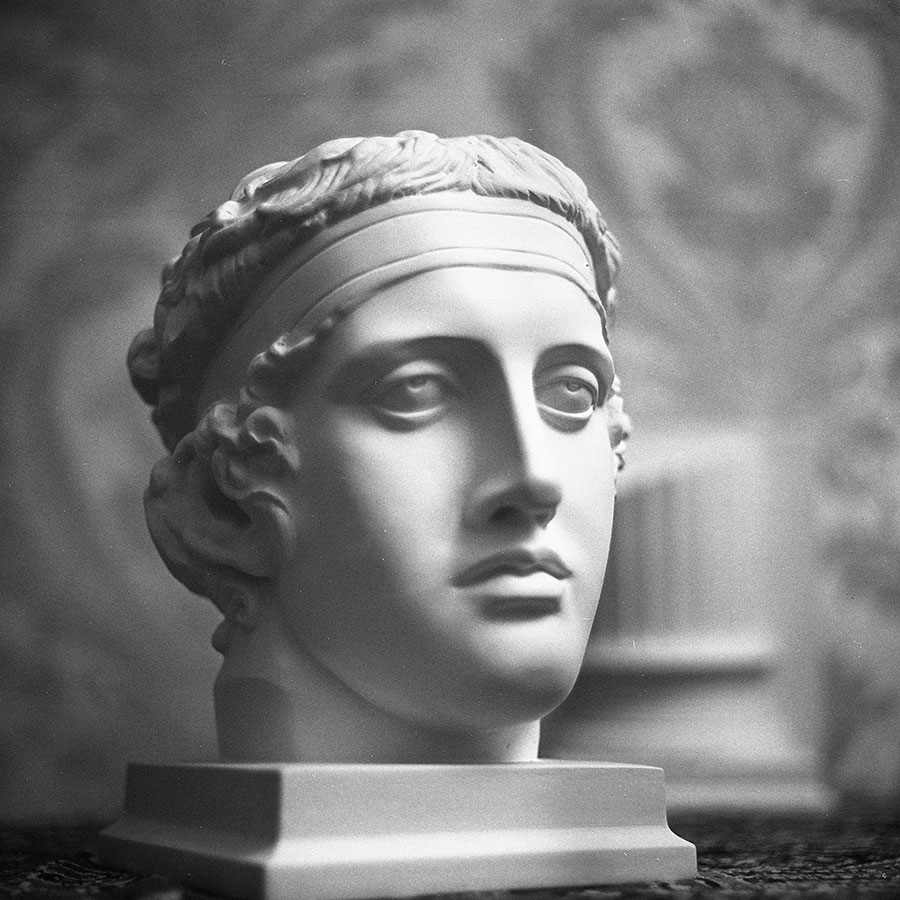
The Salut camera was an almost exact clone of the Hasselblad 1600F camera. As with the Swedish original, the camera had very user-friendly controls, a modular design with interchangeable lenses, backs, focusing hoods, and a fine set of lenses that produced very decent photographs.

Kiev-88
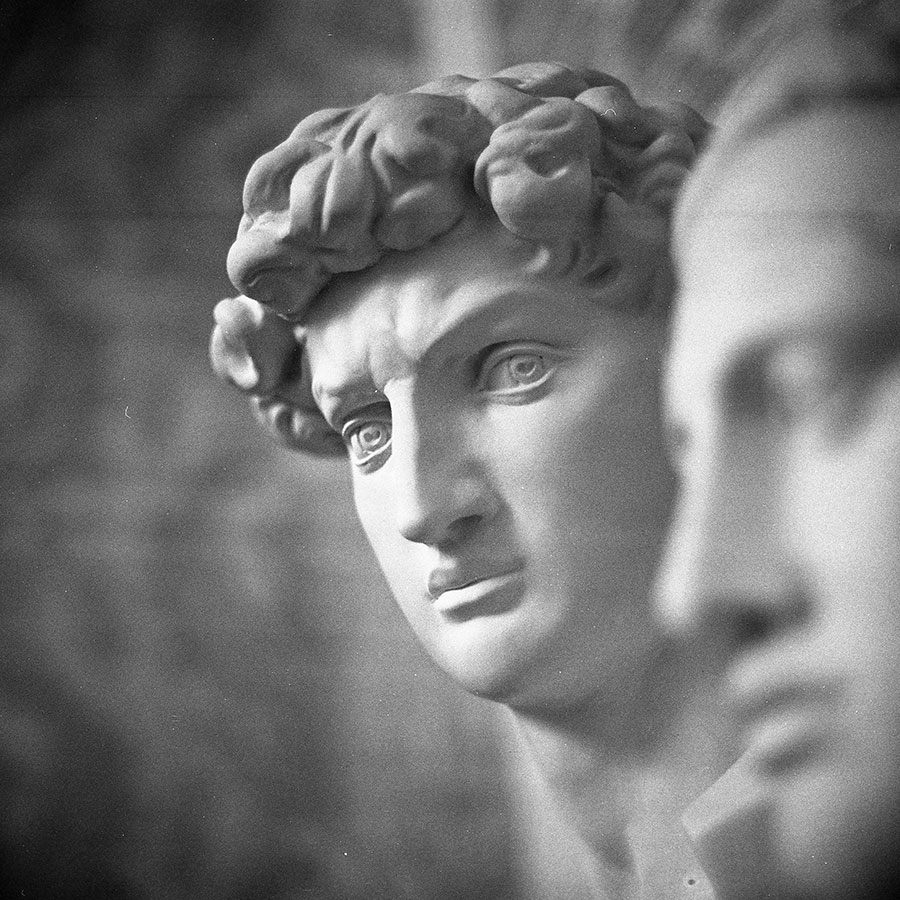
Kiev-88 is an improved version of the Salut camera. The Kiev-88 camera has few differences from the previous model, and despite the truly Soviet build quality, it is a fairly good alternative to the expensive Hasselblad. This is one of the most inexpensive modular cameras in our time.
GOMZ / LOMO Medium Format Cameras
The GOMZ factory, later renamed the more widely known LOMO, produced medium-format twin-lens cameras. The first of these was the Komsomolets, which in turn was a clone of the German Voigtländer Brillant camera.
After that, the LOMO factory produced the Lubitel series of cameras with a slightly modified viewfinder and the addition of small improvements and changes. In this form, these cameras were produced almost until the very end of the Soviet Union.
Komsomolets
The Komsomolets camera was an exact clone of the Voigtländer Brillant. Despite lacking any outstanding technical features, it was capable of producing interesting photographs with a distinctive vintage look. However, today there is little reason to seek out or purchase these cameras, as Lubitel models are generally cheaper, more practical, and superior to the Komsomolets in every respect.
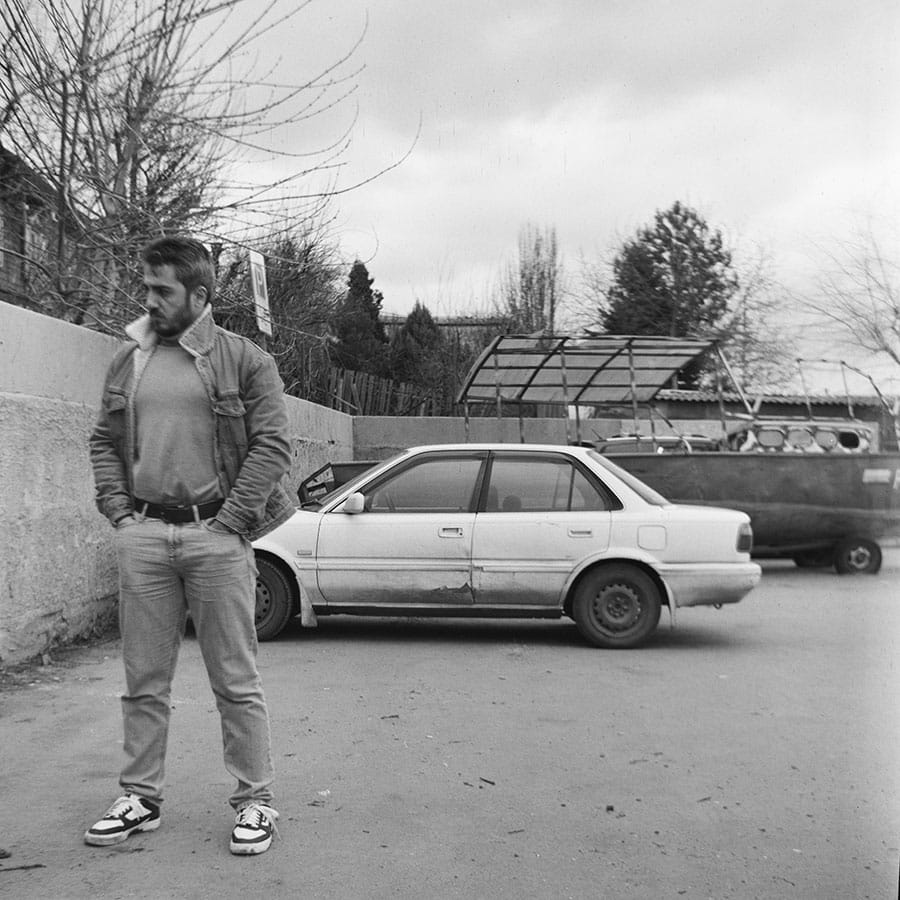
Lubitel
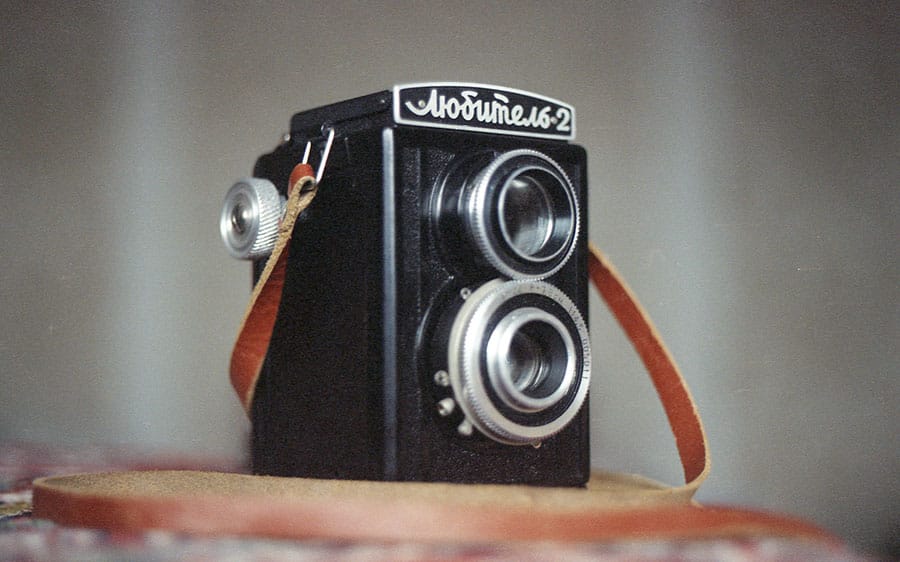
The Lubitel camera is an improved version of the Komsomolets. Unlike the earlier model, the Lubitel was equipped with a faster lens, which made it possible to shoot using lower-speed film and in poorer lighting conditions. The Triplet T-22 4.5/75 lens produces attractive images with good central sharpness and a soft rendering toward the edges.
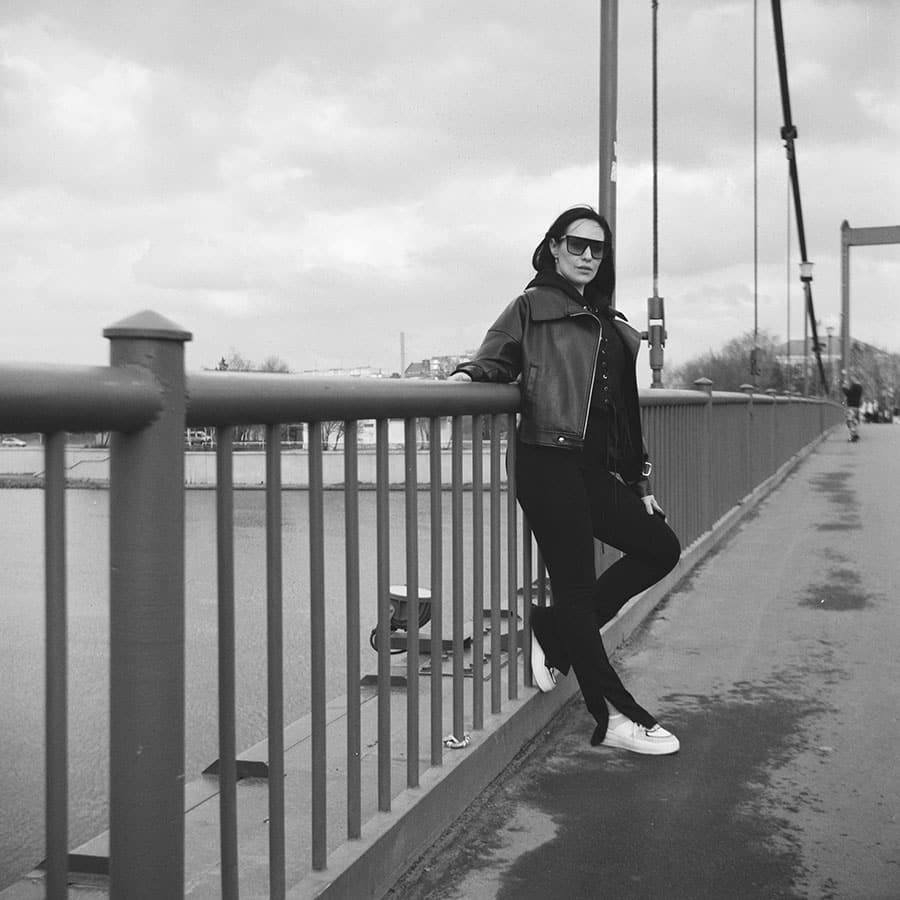
Lubitel-2
The Lubitel-2 is an improved version of the original Lubitel camera. This model added a self-timer and a flash sync contact. It was still made of bakelite and was equipped with a Triplet T-22 lens. The Lubitel-2 can still be found in online stores in good condition at an affordable price.
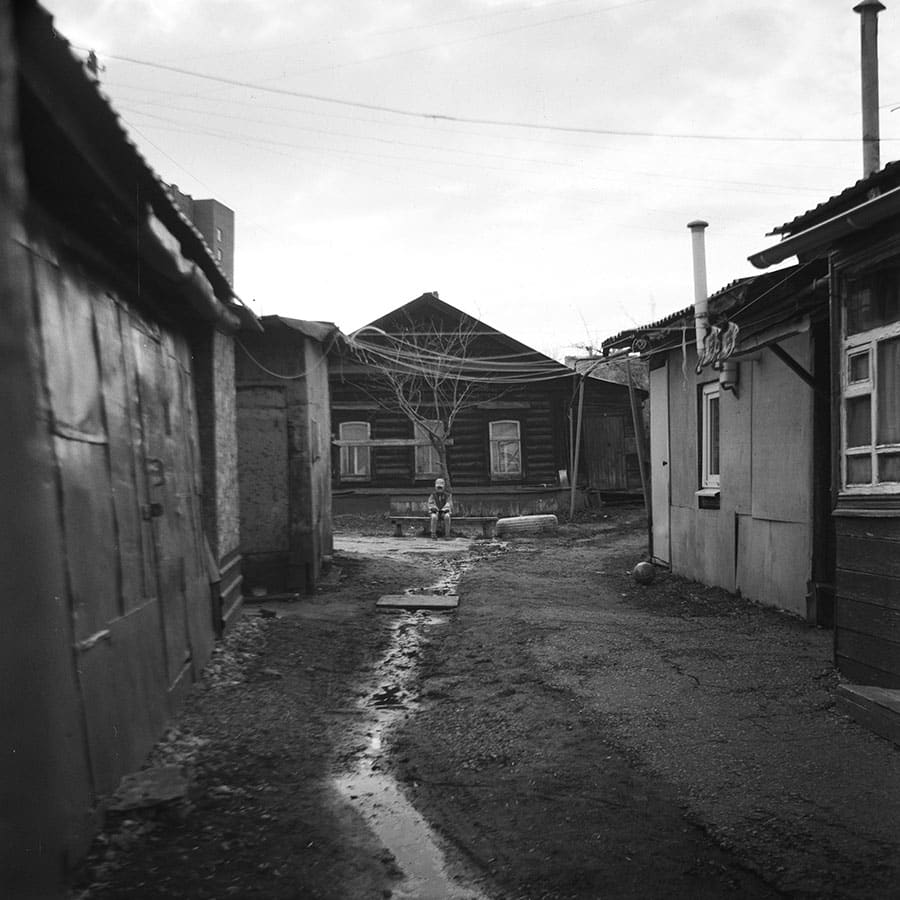
Lubitel-166
The Lubitel-166 camera was no longer made of bakelite but of plastic, which made it much lighter. In addition, it introduced a frame counter combined with an updated film advance mechanism. Because of this mechanism, the camera proved to be unreliable and was later replaced by the Lubitel-166B.
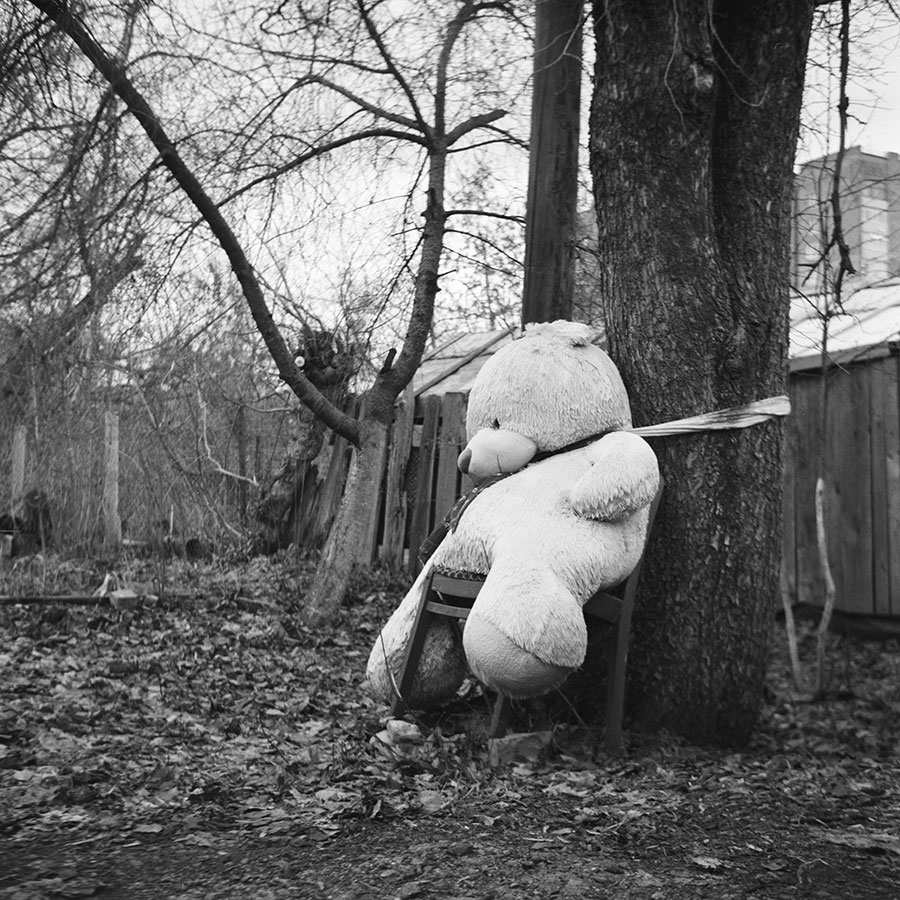
Lubitel-166B
The Lubitel-166B is an improved version of the Lubitel-166. Compared to the earlier model, the Lubitel-166B was a much more reliable, though simpler, camera. It was produced in very large numbers, so finding one in good condition today is not difficult.

Lubitel-166U
The Lubitel-166u is the final version of the Lubitel series of cameras. It incorporates all the best solutions developed and adopted by the engineers at the LOMO plant. Among other features, the Lubitel-166U is capable of shooting in both 6×6 and 6×4.5 formats.
Conclusion
So, let’s summarize what we have learned in this article about Soviet medium format film cameras. The main factories in the Soviet Union that produced this type of photographic equipment were KMZ, Arsenal, and LOMO.
The KMZ factory produced folding medium format rangefinder cameras with 6×9 cm and 6×6 cm frame sizes, such as the Moskva and Iskra models.
The Arsenal factory manufactured single-lens reflex medium format cameras inspired by Hasselblad and Pentacon Six designs, sold under the Kiev name.
The LOMO factory, in turn, produced simple twin-lens reflex cameras with 6×6 cm and 6×4.5 cm frame sizes under the Lubitel name.
Soviet medium format cameras are a solid alternative to German and Japanese 120 film cameras. Most of these cameras offer fairly good ergonomics, are capable of producing high-quality images, and are available at very low prices.