Soviet Film Cameras Explained: Plants, Brands, Classification
What are Soviet film cameras? Which brands existed, and which factories produced them? In this article, we explain this in detail and help you navigate the vast range of Soviet photographic equipment, with examples and photographs.
Brief History of Soviet Film Cameras
Let’s start with a brief historical overview. In one of the previous articles, we discussed the state of the photographic industry in the Russian Empire before 1917.
After 1917, much of photographic equipment production ceased within the territory of the newly formed Soviet state. Full-scale mass production of cameras began closer to the 1930s.
The first Soviet cameras were EFTE, which appeared in the late 20s of the 20th century. These were large-format scale cameras with a frame size of 9×12, developed on the basis of German prototypes produced at the Zeiss plant.
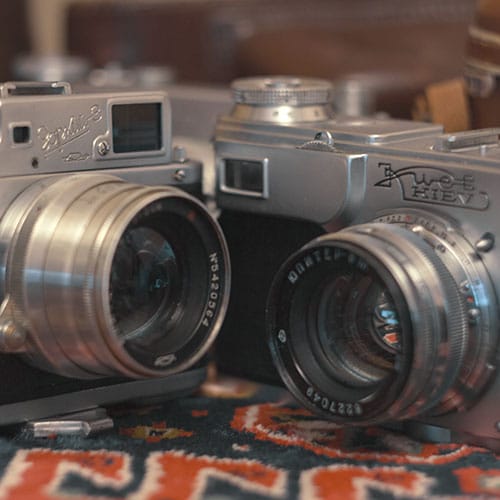
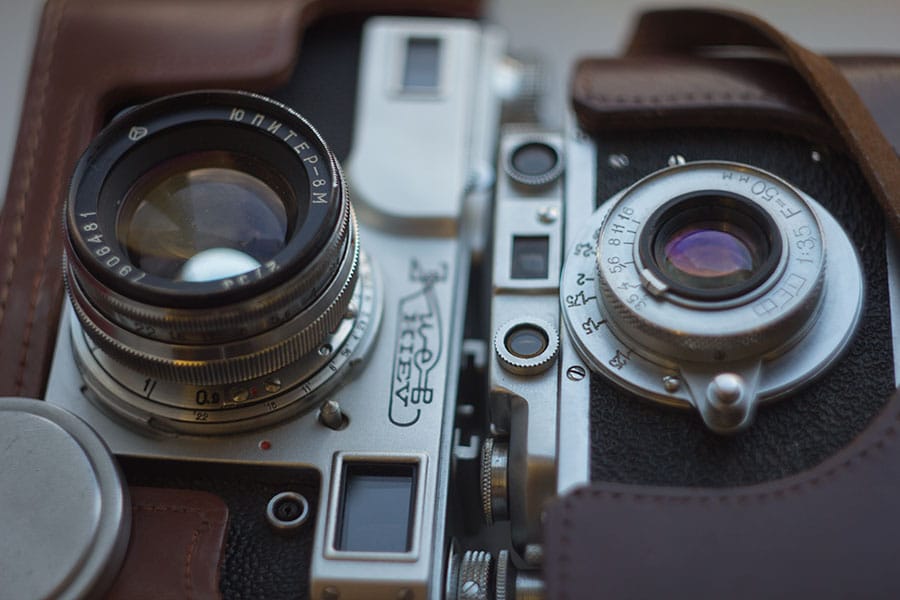
The brands that are most well known today appeared in the late 1930s, with the copying of the legendary Leica camera and the creation of the no less famous Soviet rangefinder camera FED.
After the Second World War, Leica clones also began to be produced at the KMZ factory under the name Zorki. The same factory later continued to develop rangefinder cameras and started producing SLR cameras under the Zenit name, which were initially also based on Leica technology.
At the same time, camera production continued at the FED factory, which primarily produced rangefinder cameras of the same name until the end of the Soviet Union, in numerous modifications.
Another of the oldest manufacturers of Soviet film photographic equipment was the GOMZ factory, which was later renamed LOMO. This factory specialized more in simpler cameras, such as the Smena series and the Lubitel twin-lens medium-format cameras.
Another factory that emerged after the Second World War, but did not so much clone German prototypes as relocate existing production to its own facilities, was Arsenal. It produced relatively high-quality rangefinder, SLR, and medium-format cameras under the Kiev name.
In terms of periodization, the biggest boom in new camera models and technological development occurred from the 1950s to the early 1960s. After that, the Soviet photographic industry largely continued refining and producing earlier models, with certain changes, improvements, and sometimes simplifications.
In a strict sense, Soviet cameras are those produced between 1917 and 1991. The vast majority of cameras that can be found and used today were manufactured from the 1950s through the early 1990s.
After the collapse of the Soviet Union in the 1990s, many of the same cameras continued to be produced, so they can only be considered partially Soviet, as they were already made in what was essentially a different state.
Soviet 35mm Film Cameras
Rangefinder Cameras
There were three main brands of rangefinder film cameras in the Soviet Union:
- FED
- Zorki
- Kiev
FED and Zorki were clones of Leica cameras and shared almost all of the advantages and disadvantages of the original designs.
These cameras were equipped with cloth focal-plane shutters and initially had a limited range of shutter speeds, as well as a rangefinder that was not combined with the viewfinder.
In addition, these Soviet 35mm film cameras were fitted with lenses using the M39 mount. Later, the viewfinder and rangefinder were combined into a single unit, and the number of available shutter speeds increased in some subsequent models.
Unlike the FED and Zorki cameras, Kiev rangefinder cameras were not Leica clones but were essentially original Contax cameras, produced using original German equipment and with the involvement of German specialists.
Kiev cameras were considered higher-end devices and were therefore more expensive than other Soviet rangefinder cameras.
From the beginning, Kiev models featured a coupled viewfinder and rangefinder, and a shutter speed range from 1/2 to 1/1250 (1/1000 in later models). In terms of build quality and performance, Kiev cameras were among the best Soviet rangefinders.
SLR Cameras
In the Soviet Union, almost all factories produced SLR cameras, but the two most important and popular brands were:
- Zenit
- Kiev
Zenit cameras were producers at the KNZ plant and were developed on the basis of the Zorki rangefinders and differed little from them in terms of equipment and specifications.
The main difference, of course, was the presence of a reflex mirror in the Zenit cameras. Otherwise, Zenits featured the same cloth focal-plane shutter with a shutter speed range from 1/30 to 1/500, the same method of film loading and rewinding, and even a similar lineup of lenses.
Soviet Kiev SLR film cameras were produced at the Arsenal factory and were slightly more advanced and more solidly built workhorse cameras for more experienced photographers.
They featured a wider range of shutter speeds, a larger and brighter viewfinder, a more convenient bayonet mount, and other features that set the Kiev brand apart from Zenit.
Scale Focus Cameras
Because the Soviet industry was largely oriented toward the lowest-priced market segment, a large number of inexpensive scale-focus cameras were produced at Soviet factories, the most popular of which were the Smena cameras.
Smena cameras were made from very inexpensive materials and were equipped with simple triplet lenses and basic leaf shutters. Despite the simplicity and low cost of these old Soviet cameras, they were capable of producing very interesting photographs.
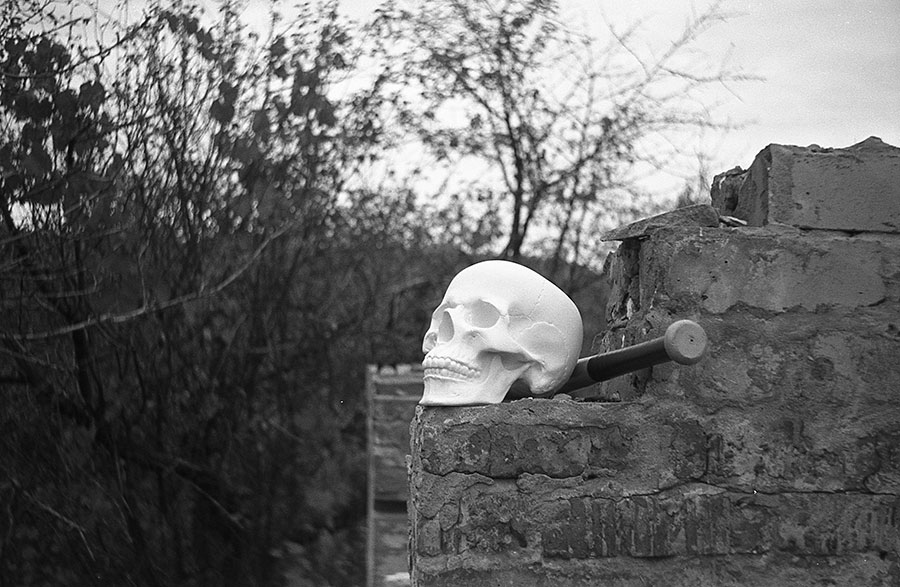
In addition, the BELOMO plant produced Vilia cameras similar in form factor and characteristics. These Soviet cameras were equipped with similar triplet lenses and similar shutters.
Soviet Medium Format Film Cameras
Among Soviet cameras, there were not only 35mm models but also medium format film cameras. The most popular Soviet medium format film cameras were:
- Moskva
- Iskra
- Lubitel
- Kiev
Medium Format Rangefinder Cameras
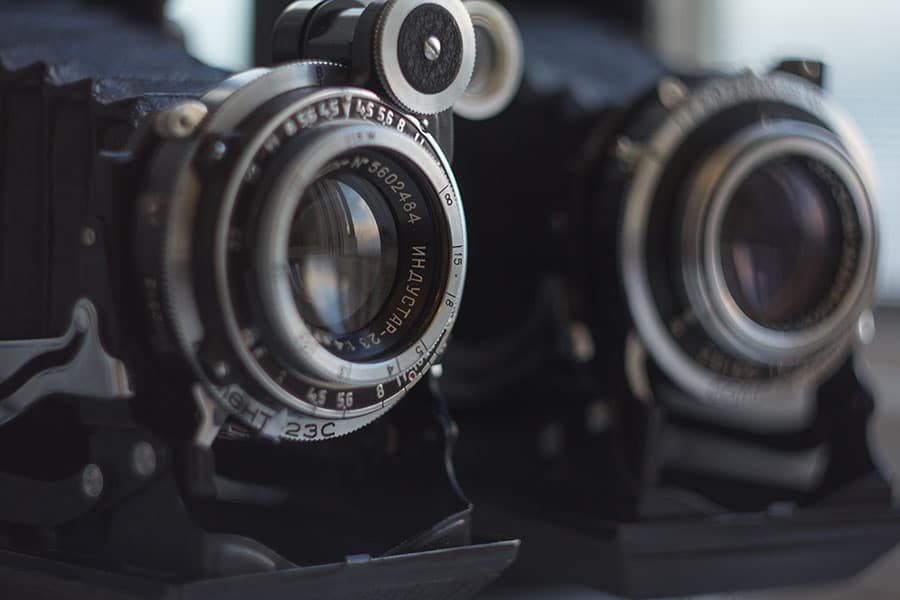
One of the first Soviet medium format cameras was the Moskva series of medium format rangefinder cameras with frame sizes of 6×9 and 6×6 cm.
These were essentially folding Soviet medium format cameras that were clones of the German Carl Zeiss Ikonta. Moskva medium format cameras were equipped with Industar lenses, which were based on the Tessar optical design, and featured leaf shutters with a fairly solid range of shutter speeds from 1 second to 1/250.
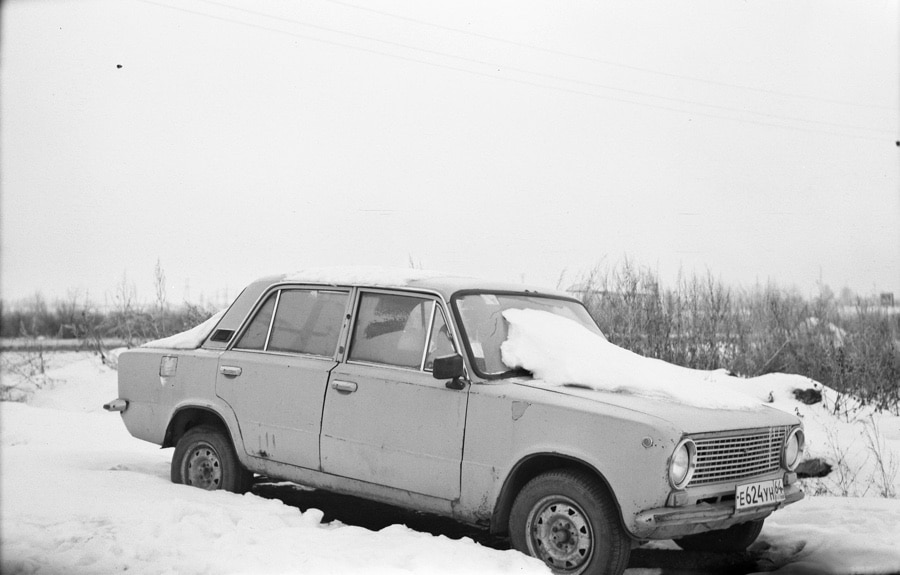

A further development and improvement of the Moskva rangefinders was the Iskra cameras, with a 6×6 cm frame size. The Iskra Soviet medium-format rangefinders were noticeably superior to the Moskva models.
They featured a coupled rangefinder and viewfinder, which was very large and bright, as well as an unusual but very convenient frame-counting system. Iskra is considered one of the best Soviet cameras.
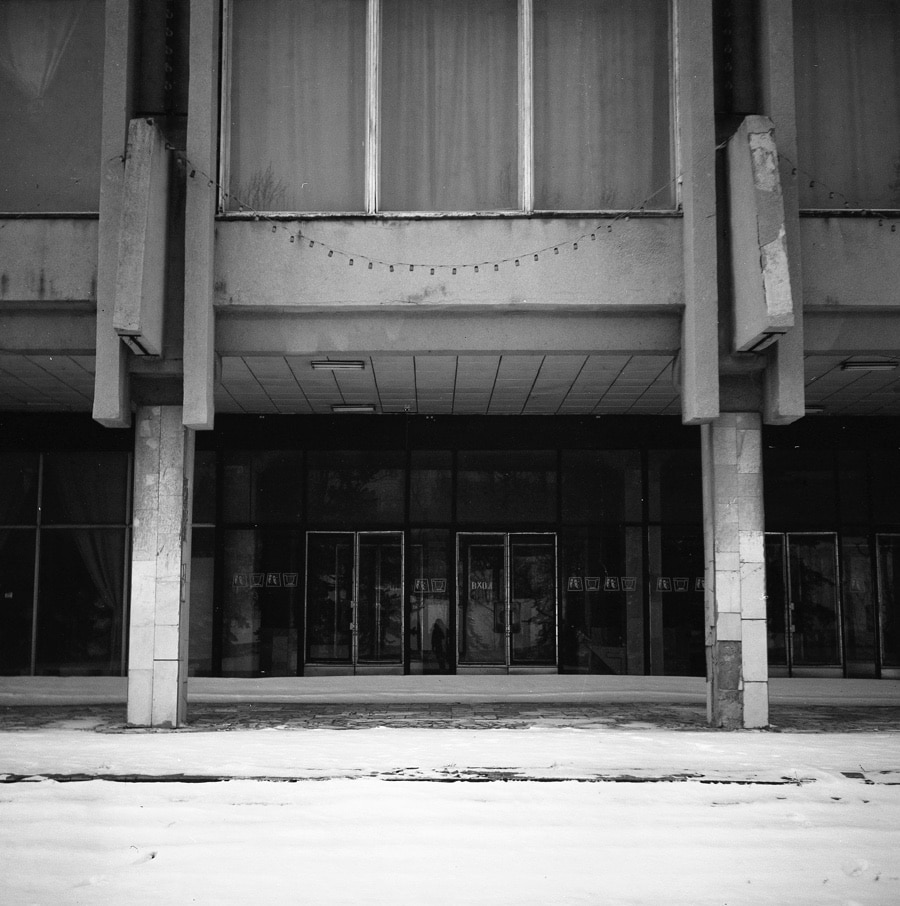
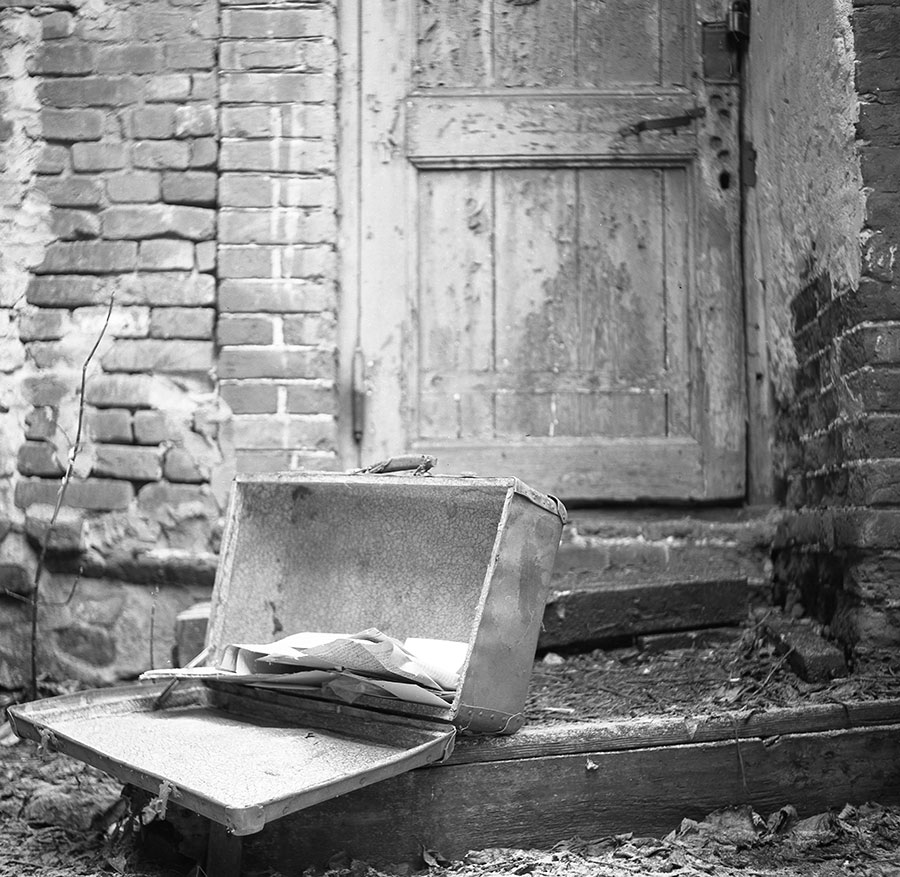
Medium Format TLR Cameras
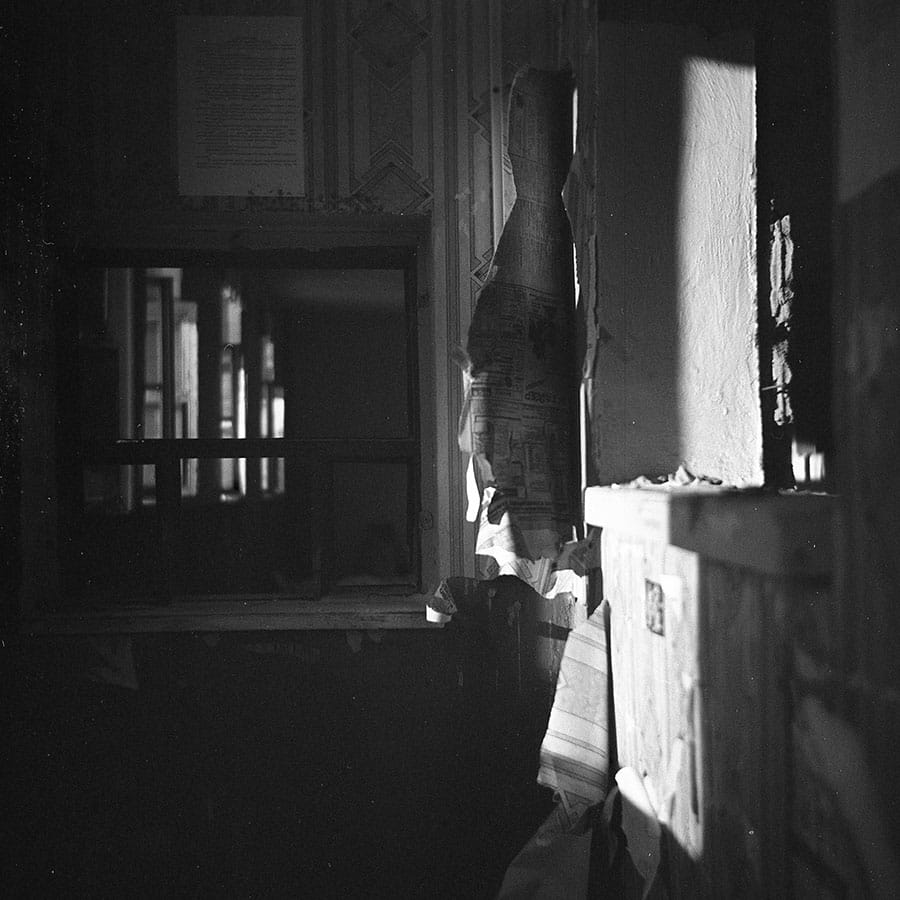
The most popular Soviet TLR was the Lubitel, developed on the basis of the German Voigtländer Brillant. The Lubitel TLR was known for the fact that, despite its low cost, it could produce fairly high-quality and interesting photographs.
These Soviet TLR cameras were produced for several decades, during which time a number of changes and improvements were introduced.
Even by Soviet standards, Lubitel cameras were very simple, yet no less functional and capable of producing good image quality. Despite their simplicity, these were by no means toy cameras, but fully fledged photographic tools with reasonably good lenses and solid, albeit simple and inexpensive, body construction.
The minimal set of features was sufficient to cover most photographic needs, and their very low cost today allows almost anyone to try medium-format photography for the price of just a few rolls of film.
Medium Format SLR Cameras
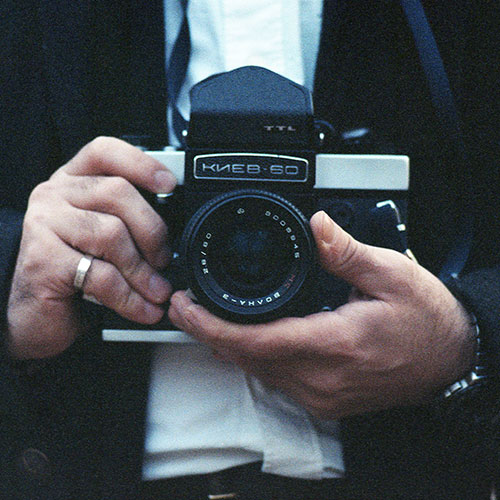
The best Soviet medium format cameras, in our opinion, are the Kiev medium format models. These cameras can be divided into two types: those with a Hasselblad-style form factor and those with the form factor of a conventional 35mm SLR camera.
The difference between them, in our view, lies mainly in ergonomics and personal preference, since both options deliver the same image quality, as they use the same lenses, differing only in mount type.
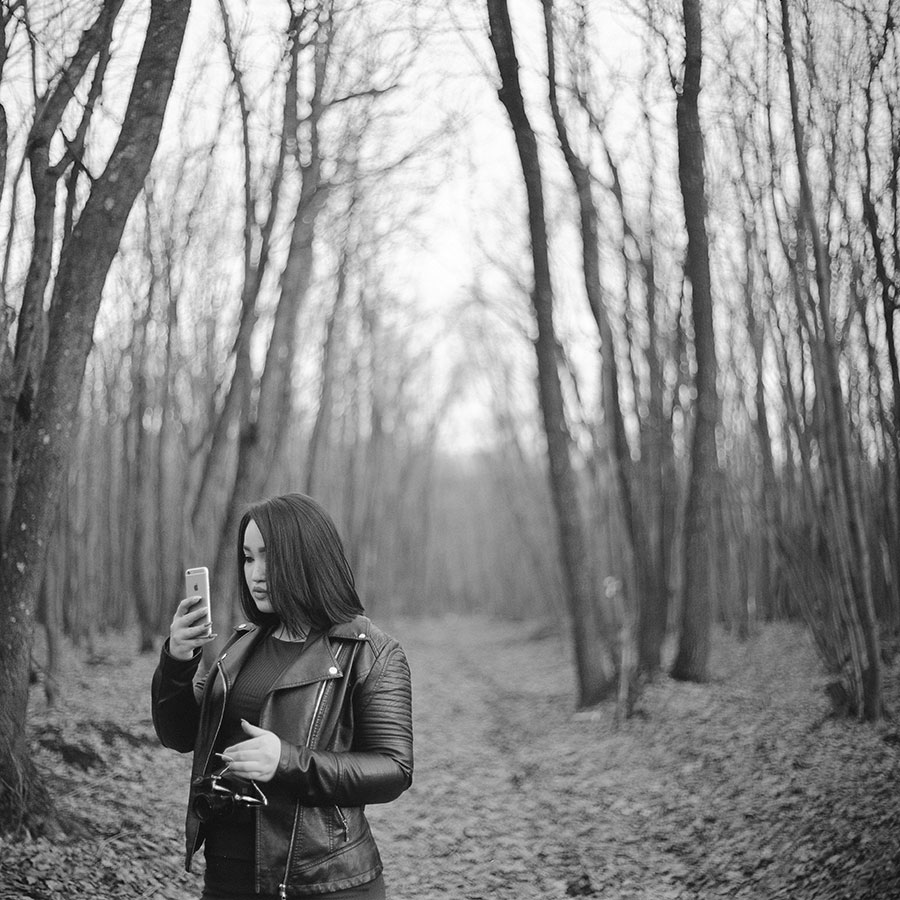
Being fairly close copies of German and Swedish cameras, these Soviet medium-format film cameras performed very well in practical use and continue to do so today.
These cameras were equipped with very good and fairly advanced lenses, although they were somewhat inferior to their German counterparts. In addition to solid optics, they also offered a wide range of advanced-for-their-time features for their place of production, such as a strong set of shutter speeds, modular design, and good overall usability.

Soviet Large Format Film Cameras
The Soviet photographic industry produced not only 35mm and medium-format equipment but also large-format cameras. These are less popular today, and many of them are difficult to find in good condition, so we will discuss them only briefly.
The most commonly encountered and probably the easiest Soviet large-format camera to find on the secondary market is the Fotokor, which was produced starting in the 1930s and used 9×12 cm film. It was a folding camera, similar in concept to the Moskva but with a much larger frame size, and it did not use roll film but sheet film.
Other well-known large-format cameras in the Soviet Union included the FKD (FotoKamera Dorozhnaya), FKP (FotoKamera Pavilionnaya), and FKR (FotoKamera Reproduktsionnaya).
These cameras were most often found in Soviet photo studios and were commonly used for professional studio portrait work. They were large view cameras available in 13×18 cm, 18×24 cm, and 30×40 cm formats and featured an extremely archaic method of operation.
In addition to its large format, the use of corresponding lenses, and the resulting image quality, these cameras were Soviet models to offer limited movements of the rear standard.
Conclusion
So, let’s summarize what we have learned about Soviet film cameras and briefly classify them. Soviet cameras are generally considered to be those produced between 1917 and 1991; everything produced afterward can only be conditionally regarded as Soviet.
Over several decades of the Soviet Union’s existence, many large and small factories operated on its territory. However, the main manufacturers whose brands are still well known today and widely available on the secondary market are KMZ, Arsenal, FED, and LOMO.
The primary brands of 35mm rangefinder cameras were FED and Zorki, which were initially almost complete copies of Leica cameras, but were later supplemented with their own developments and influenced by ideas from German and Japanese brands. The main brands of 35mm SLR cameras were Zenit and Kiev, although over the decades there were also cameras produced in smaller numbers and smaller batches, such as the professional Start camera.
The main brand of the simplest scale-focus cameras was Smena, as well as the less popular Vilia. The most popular medium format cameras in the Soviet Union were the folding Moskva and Iskra cameras, the single-lens Kiev cameras in two different form factors, and the twin-lens Lubitel cameras.
These are, of course, only the most popular and commonly encountered models that are worth discussing in a general overview. There were many experimental cameras, as well as models produced in very small numbers, which today are of greater interest primarily to collectors.
Overall, the Soviet photographic industry represents a very interesting chapter in history, and Soviet film cameras are not only objects for display on a shelf but also capable tools for producing very high-quality images.