Smena
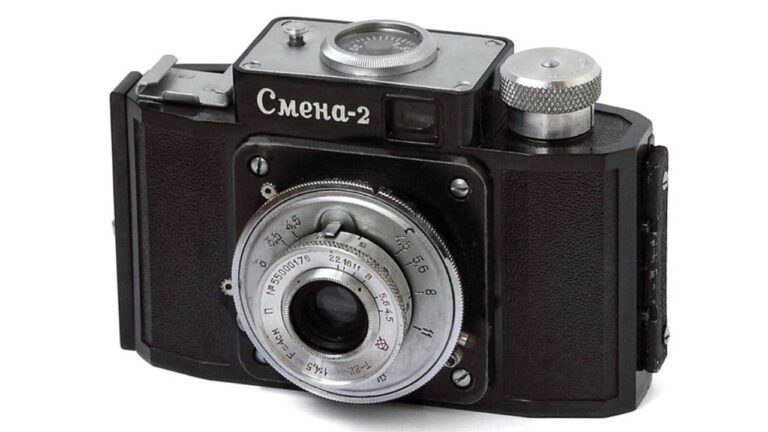
In this article, we will talk about the Smena-1 camera – the very first model in the legendary Smena camera family.
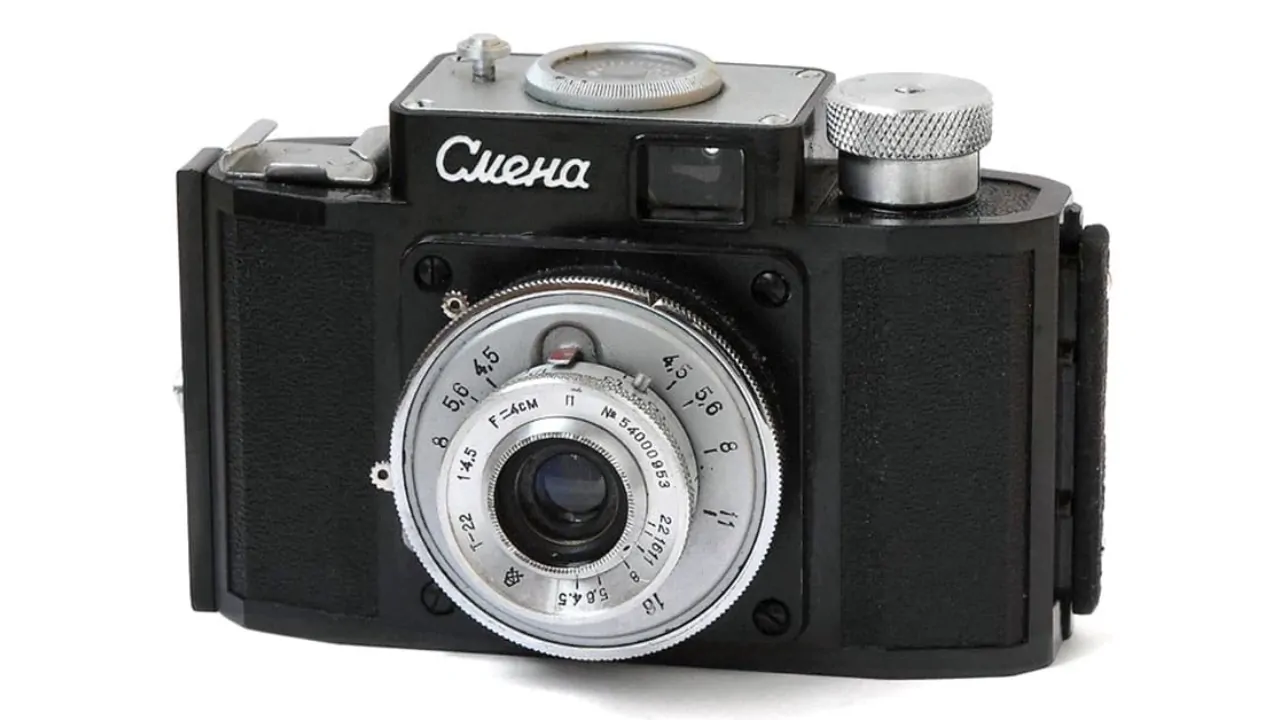
Smena Specifications
- Type: 35mm viewfinder camera
- Manufacturer: GOMZ plant
- Production period: 1953 – 1962
- Format: 24×36cm on 135 film
- Lens mount: fixed lens
- Lens: T-22 f/4.0 40 mm
- Shutter: leaf shutter with speeds from 1/10 to 1/200 sec.
- Viewfinder: optical viewfinder
- Light meter: none
- Flash synchronization: none
- Self-timer: none
- Weight: 290 grams
Smena-1 Overview
Smena cameras were not just popular but truly widespread in the USSR. Almost every family in the Soviet Union owned such a camera or a similar one.
A large portion of home photo archives was created using Smena cameras, and many amateur photographers took their very first steps in photography with this Soviet camera in their hands.
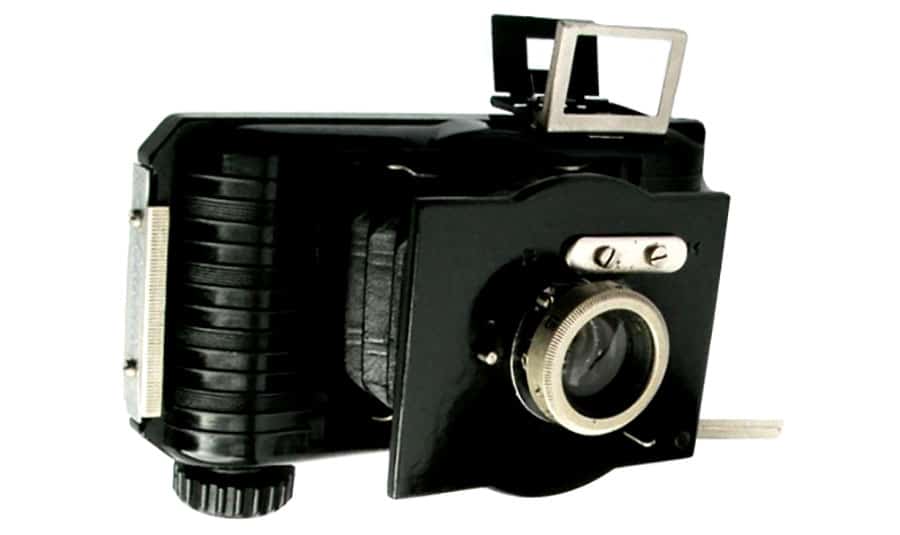
Smena cameras first appeared in 1939. However, these early models were completely different and had little in common with the Smena cameras produced after World War II. They were simple folding cameras made of plastic, equipped with an f/6.5 lens and offering only two shutter speeds: 1/50 and B.
After World War II, camera production at the GOMZ plant continued. Although the camera retained the same name, its design was entirely reworked. The postwar Smena cameras became noticeably more advanced in technical terms.
The very first postwar Smena model was produced from 1953 to 1962 at the GOMZ factory. This camera was equipped with a non-interchangeable T-22 4.5/40 triplet lens. Essentially, it was the same T-22 optical design used in the Komsomolets and Lubitel cameras, but adapted for 35mm film.
Smena-1 Lens
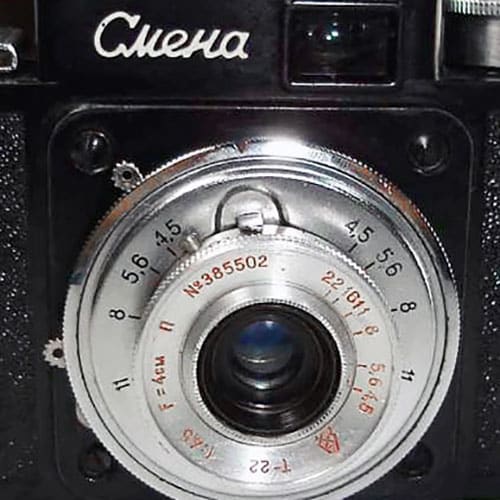
The Smena-1 is equipped with a fixed T-22 4.5/40 lens of triplet optical design. This lens was not developed specifically for the Smena line.
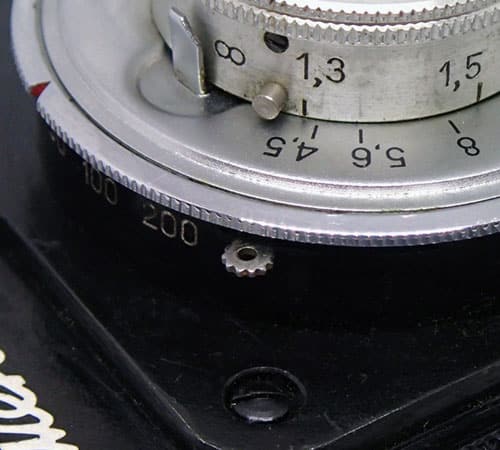
In fact, it is a reworked version of the T-22 previously used in the Komsomolets and Lubitel cameras, adapted for the 35mm format.
This continuity reflects the general Soviet approach to optics development, where proven designs were reused across different camera systems.
The focal length of 40 mm places the lens in the moderate wide-angle category for the 24×36 mm frame. The maximum aperture of f/4.5 is modest, but typical for entry-level cameras of the early 1950s.
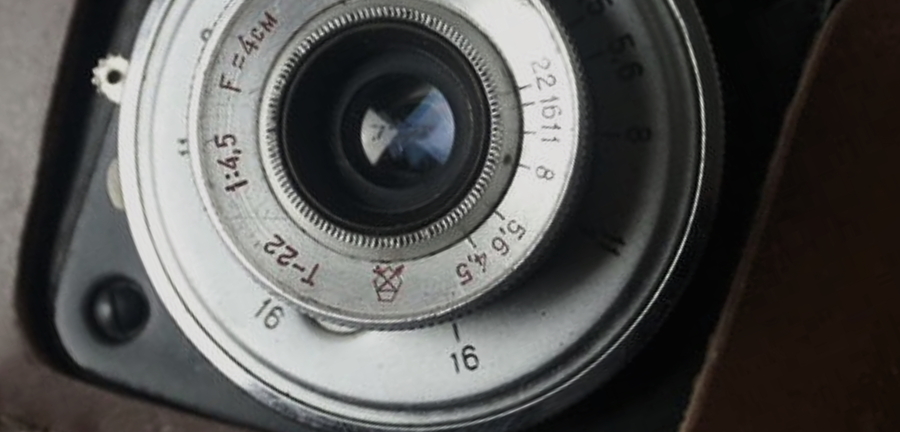
Aperture settings range from f/4.5 to f/22 and are controlled manually via a ring on the lens barrel. Focusing is performed by rotating the entire lens unit and is based solely on a distance scale.
The minimum focusing distance is approximately 1.3 meters, which limits close-up work and effectively excludes macro photography without auxiliary attachments.
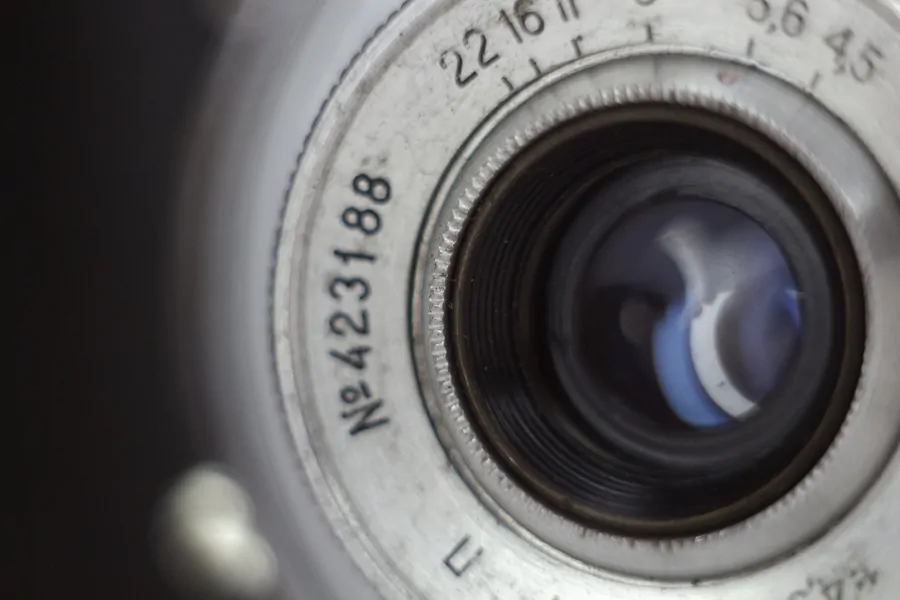
Optically, the T-22 behaves as expected from a simple triplet. At wider apertures, images tend to show lower contrast and visible softness, especially toward the edges of the frame.
Stopping down significantly improves sharpness and overall image consistency. The rendering remains relatively smooth, with characteristic transitions and a distinct vintage look that is typical for triplet lenses of this era.
Smena-1 Shutter
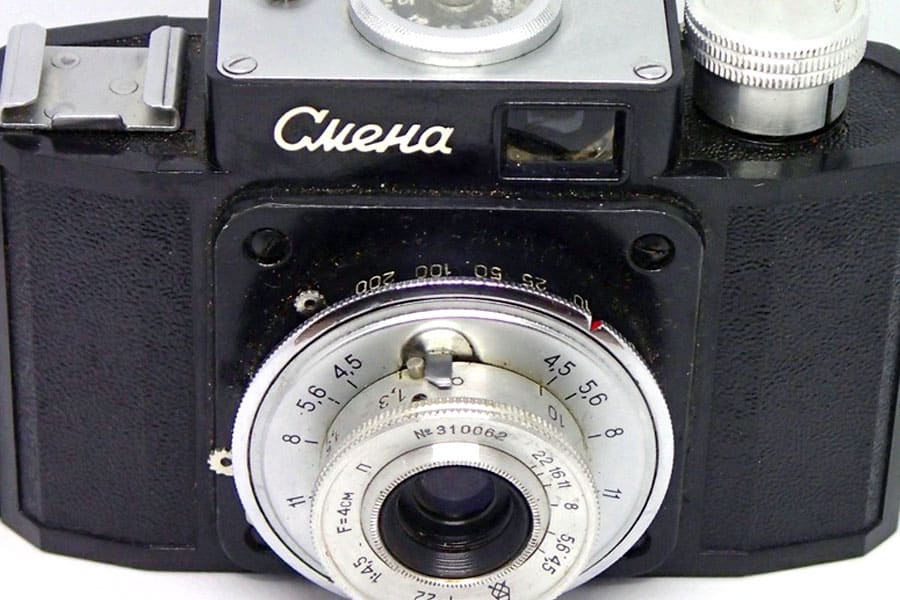
The Smena-1 is equipped with a fully mechanical central (leaf) shutter built into the lens assembly. This shutter design was typical for entry-level Soviet cameras of the early 1950s.
The shutter operates independently from the film transport mechanism, which reflects the overall modular construction of the camera.
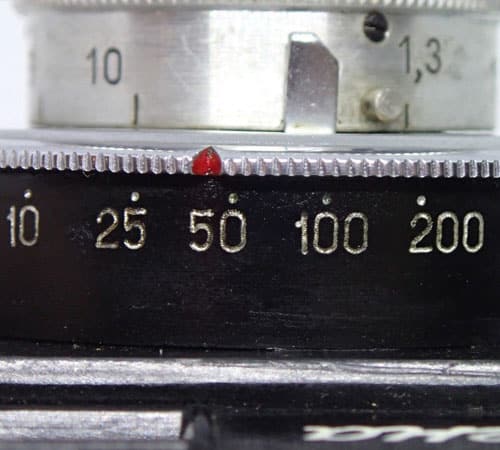
The available shutter speeds are 1/10, 1/25, 1/50, 1/100, and 1/200 seconds, along with the “B” (Bulb) setting. For a beginner-oriented camera of that period, this range was relatively broad. Shutter speeds are selected manually using a ring at the base of the lens.
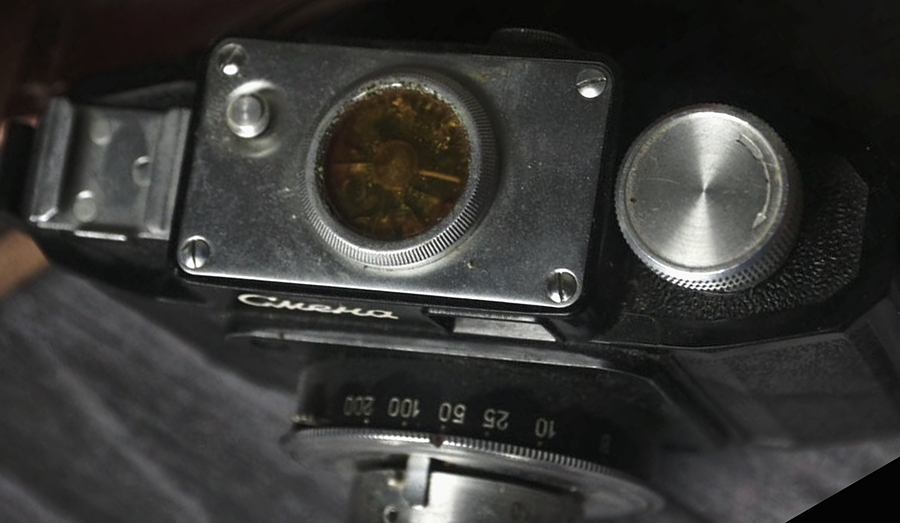
The shutter must be cocked separately before each exposure using a dedicated lever. This operation is not linked to film advance, so the photographer is required to follow a strict shooting sequence.
This design reduces mechanical complexity but increases the chance of user error, which was considered acceptable for an amateur camera.
Flash synchronization was not standard across all Smena-1 units. Early versions often lacked a sync contact altogether, while some later examples were equipped with an X-sync contact.
As with most aging mechanical shutters, actual timing accuracy depends heavily on the condition of the mechanism.
Camera Body and Controls
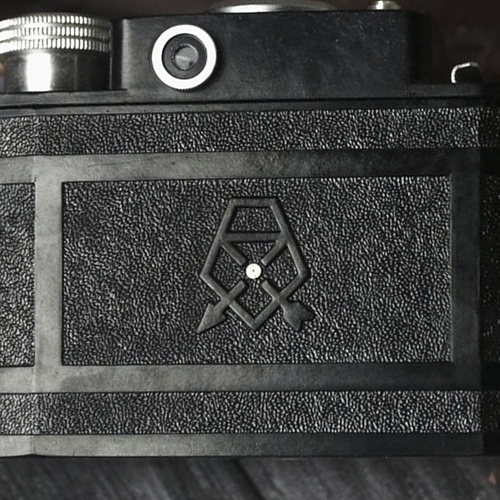
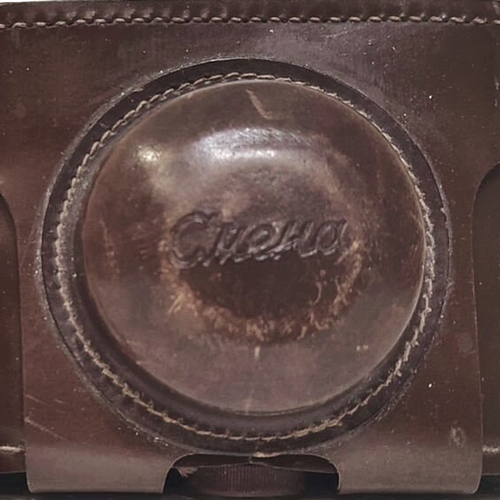
This Soviet film camera has a very simple body design that fully reflects its purpose as an entry-level camera. The body is made of plastic, which was a common solution for Soviet mass-produced cameras of this class.
Despite the modest materials, the construction is fairly solid and lightweight. The overall shape is compact, with a flat front panel and minimal protruding elements.
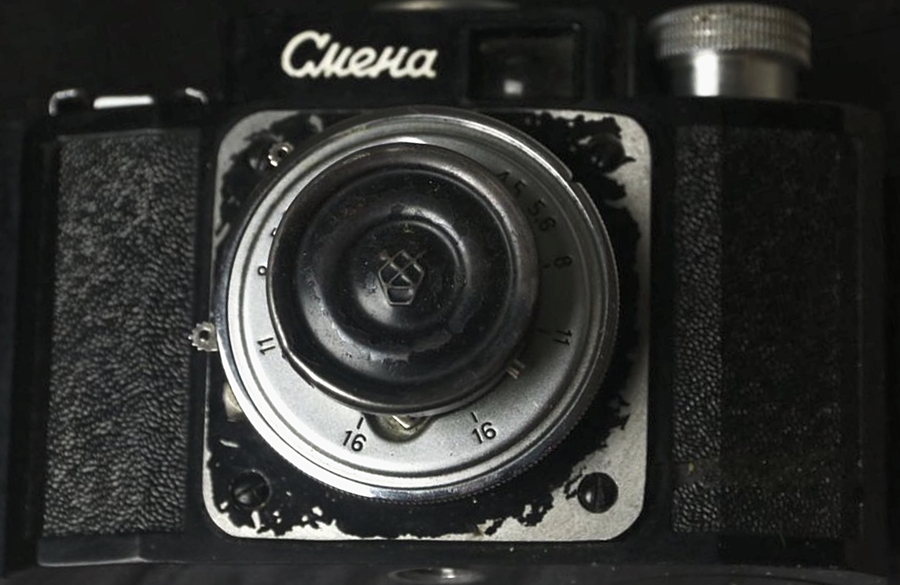
All main controls are grouped around the lens. The aperture ring and shutter speed selector are located directly on the lens assembly.
This arrangement closely resembles that of earlier Soviet cameras and even some large-format designs, where exposure settings are adjusted directly on the lens rather than through separate dials.
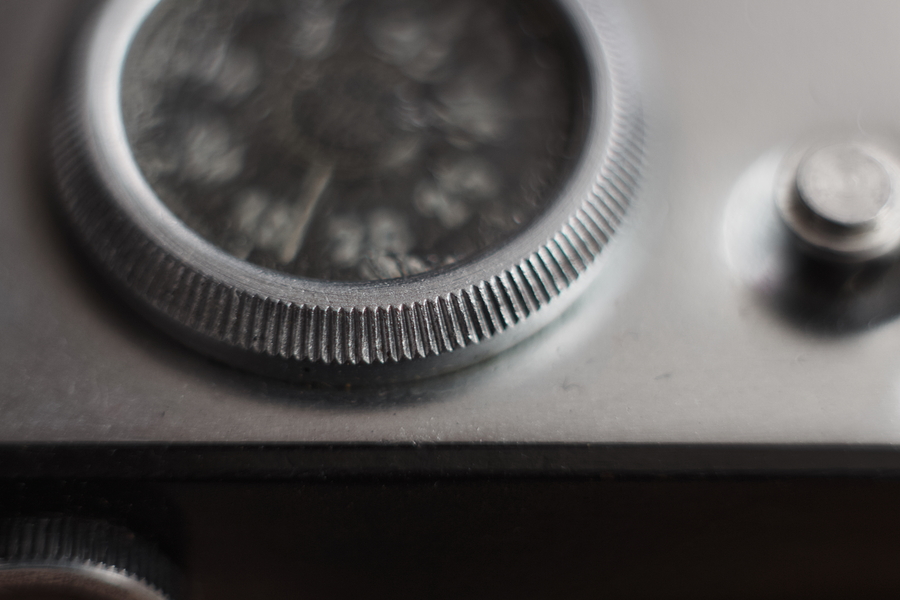
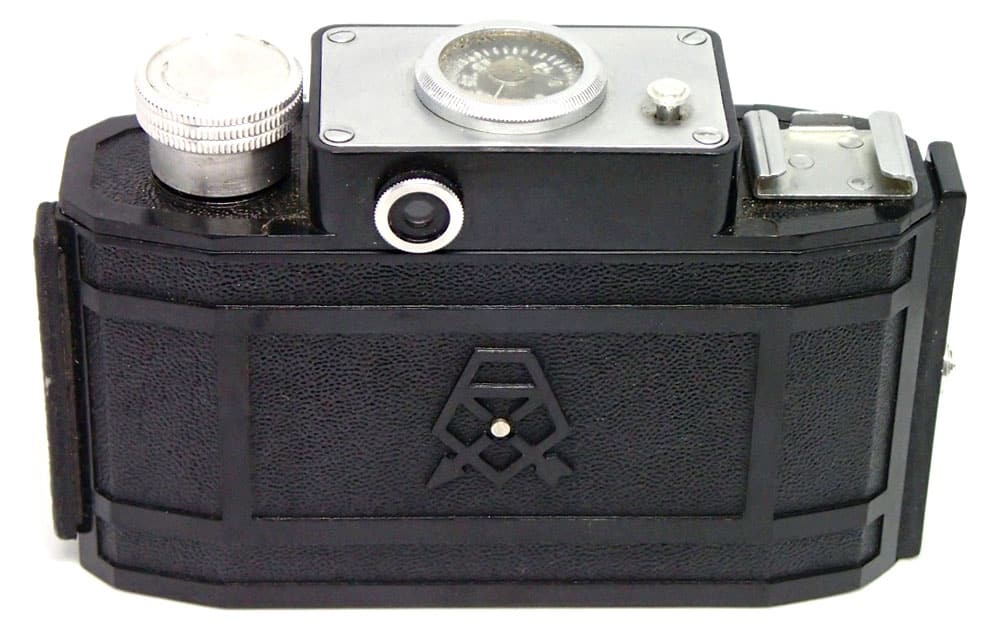
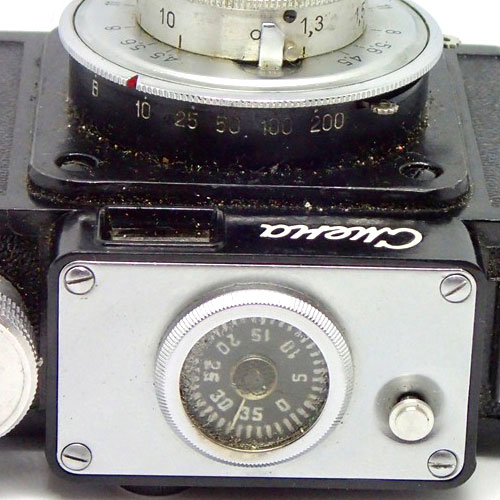
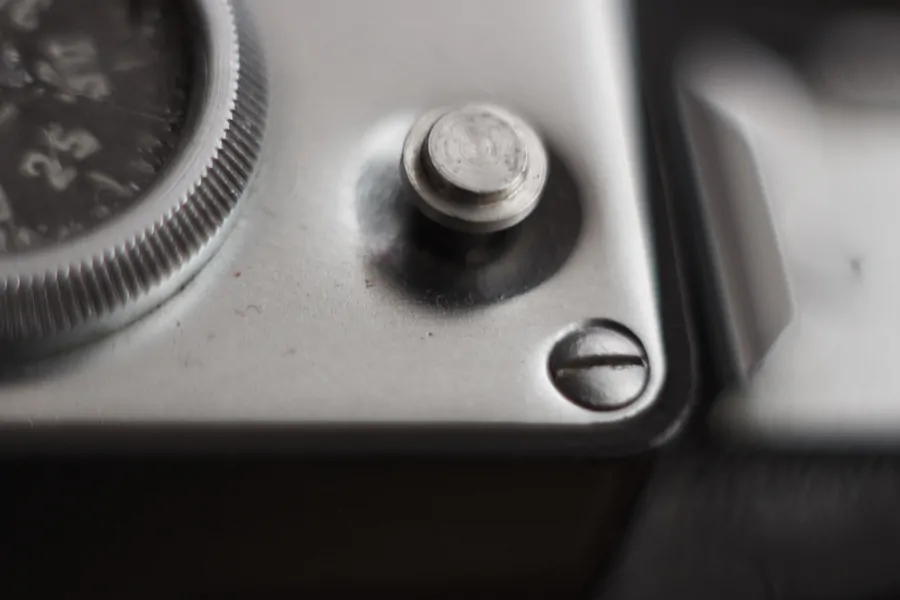
Film advance is performed using a knob on the top plate. The Smena-1 is equipped with a simple mechanical frame counter, also located on the top of the camera.
This simple mechanism automatically counts each frame, but it must be manually reset to zero each time a new roll of film is loaded.
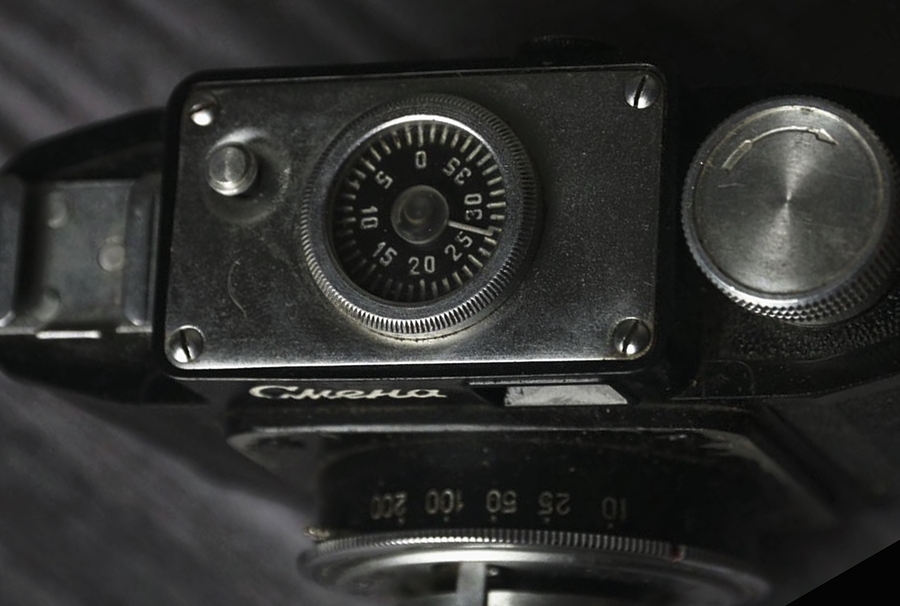
The counter has a clock-style design and must be set manually when loading a new roll of film. Film rewind is carried out using the same top-mounted knob, without any additional release buttons or complex mechanisms.
Interestingly, on the upper right side of the camera body there is a button that at first glance may appear to be the shutter release, but in fact it is the film release button.
The viewfinder is a basic optical unit with no frame lines or parallax correction. It provides only a rough approximation of the scene, which again aligns with the camera’s overall simplicity.
At the same time, this extremely simple viewfinder provides a very clean image, and for focusing you can always attach an external rangefinder to the cold shoe.
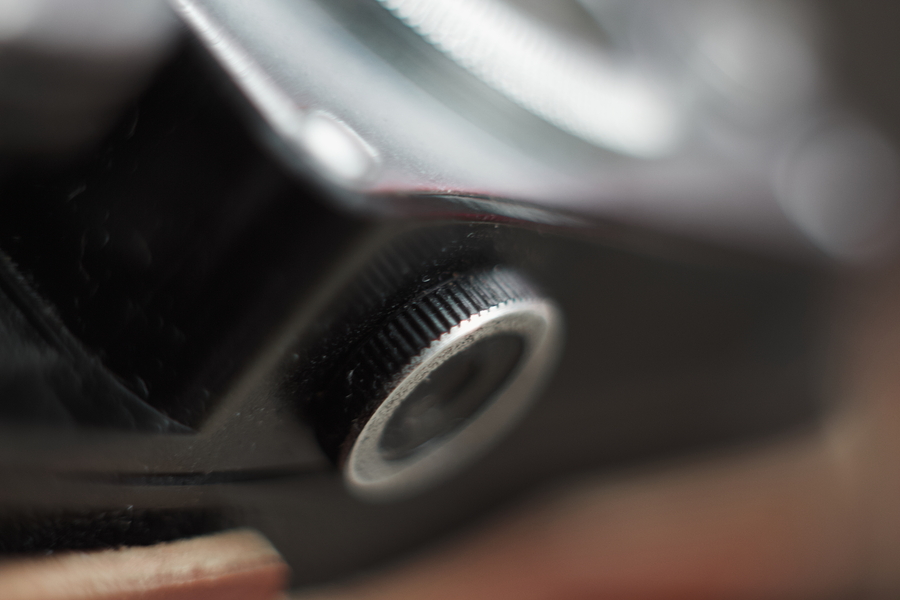
There is no built-in light meter, rangefinder, or exposure assistance of any kind, requiring the photographer to rely entirely on experience or external guidance.
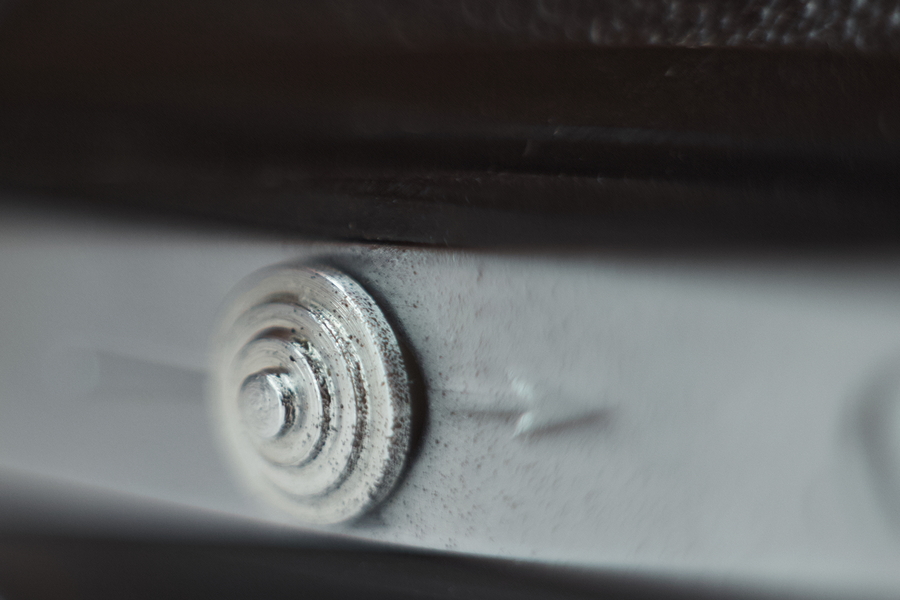
The camera’s back cover is completely removable. To open it, there is a latch on the side of the body that must be slid downward in the direction of the arrow to release the rear panel.
Conclusion
As mentioned more than once, the Soviet Union repeatedly attempted to create a professional camera aimed at demanding photographers.
Each time, however, engineers faced the realities of the Soviet system. Low consumer purchasing power, difficulties in distributing photographic equipment, and relatively low quality-control standards at factories ultimately shaped the final results of their work.
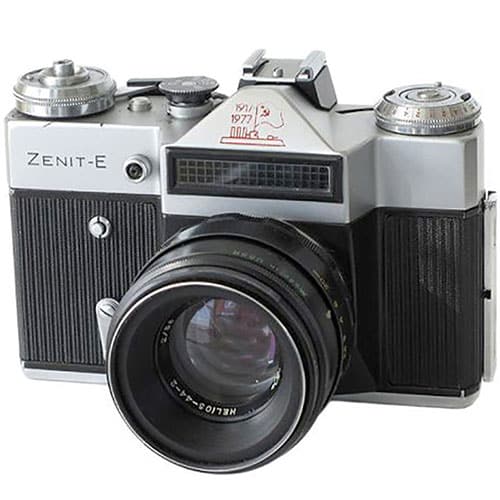
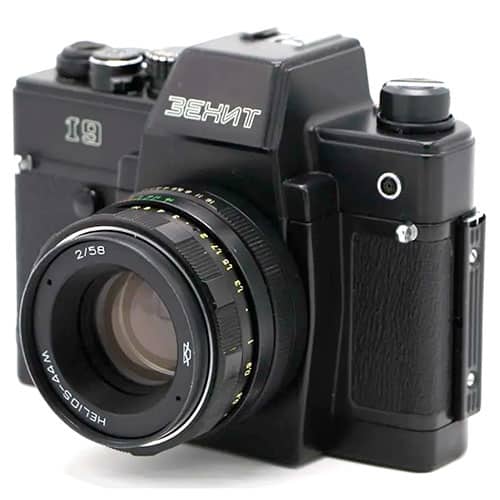
As a result, cameras such as the Leningrad, Zenit-19, Kiev-20, or Zenit Automat never gained wide popularity on the market.
At the same time, for the very same reasons, simpler and less technologically complex cameras such as the Smena or Lubitel became extremely popular.
One of the key objectives of the Soviet Union was to spread its influence worldwide, and the camera became one of the most effective tools for that purpose.
In this context, and given the fact that photography was very popular among the general population, Smena cameras achieved truly mass popularity in the USSR.
If you want to try a genuinely simple camera, this small Soviet model can be a suitable option. It offers a very direct experience of using early photographic equipment and, when combined with the T-22 Triplet lens, is capable of producing images with a visual character reminiscent of early 20th-century photography.
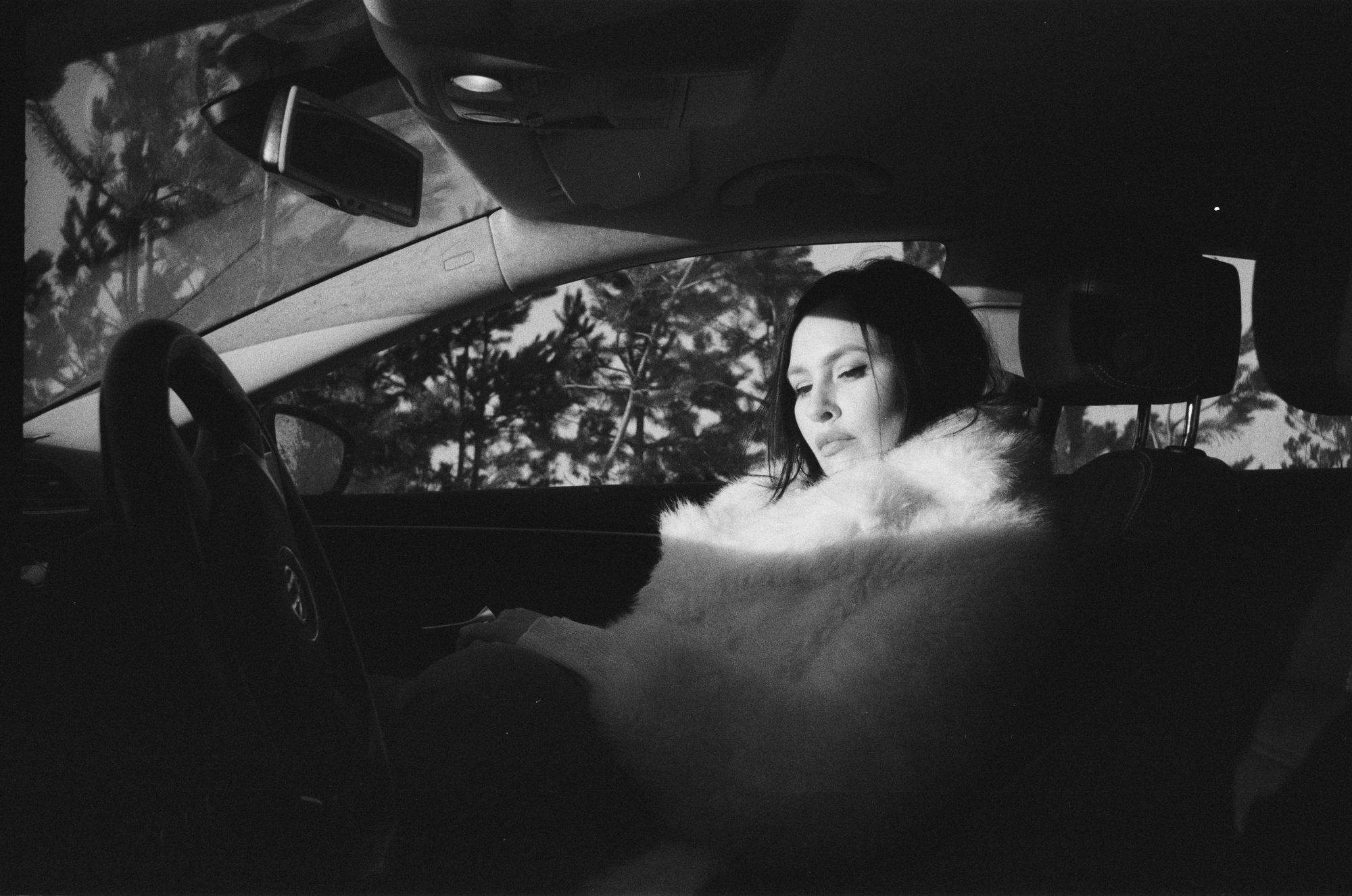
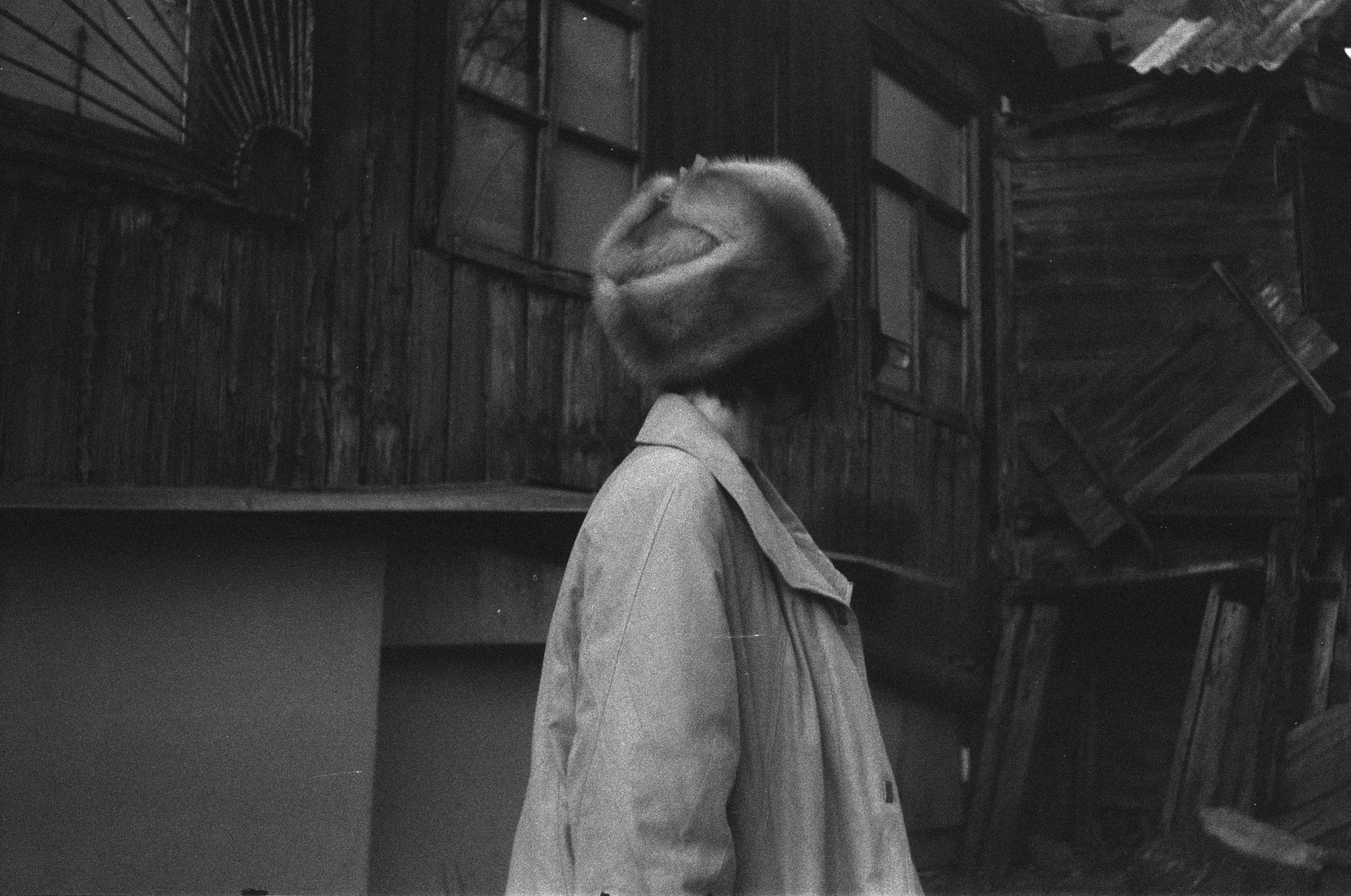
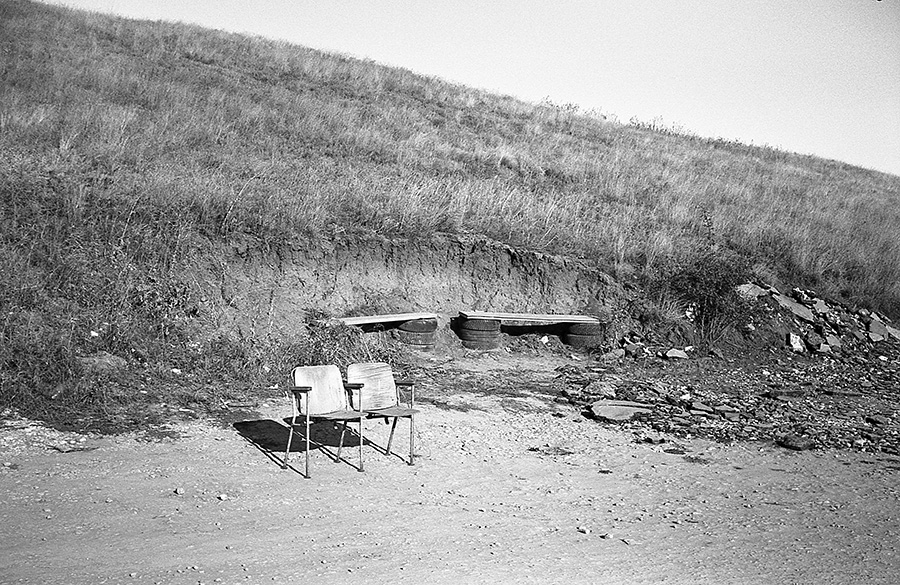
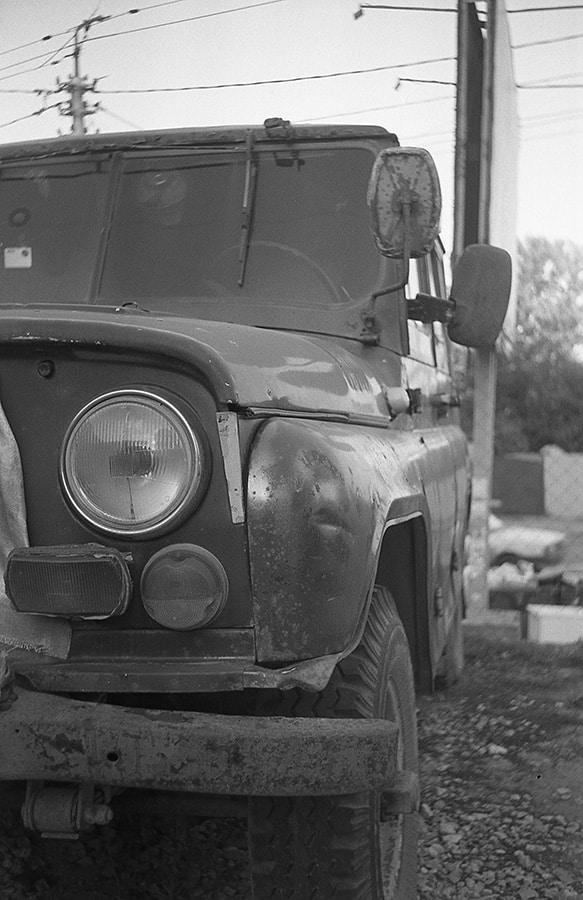
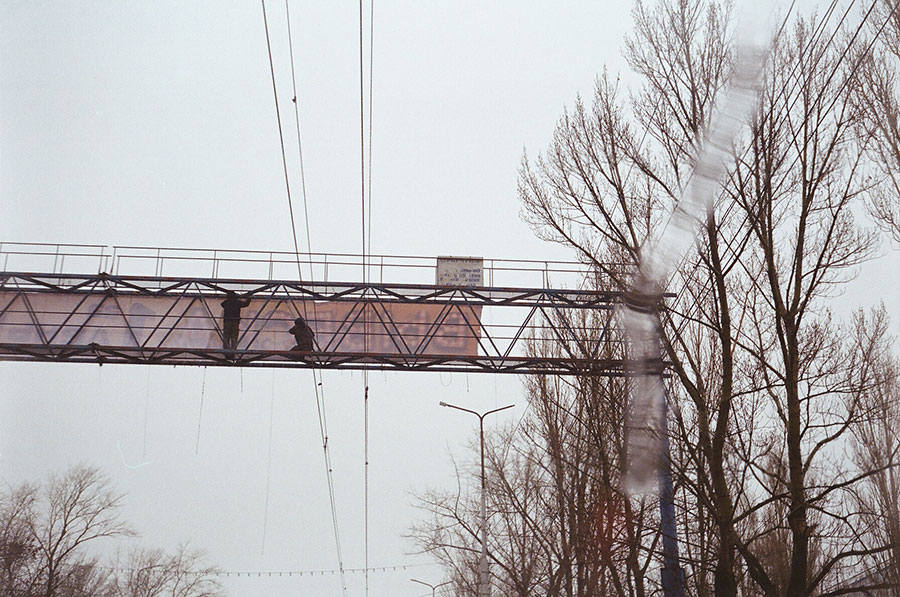
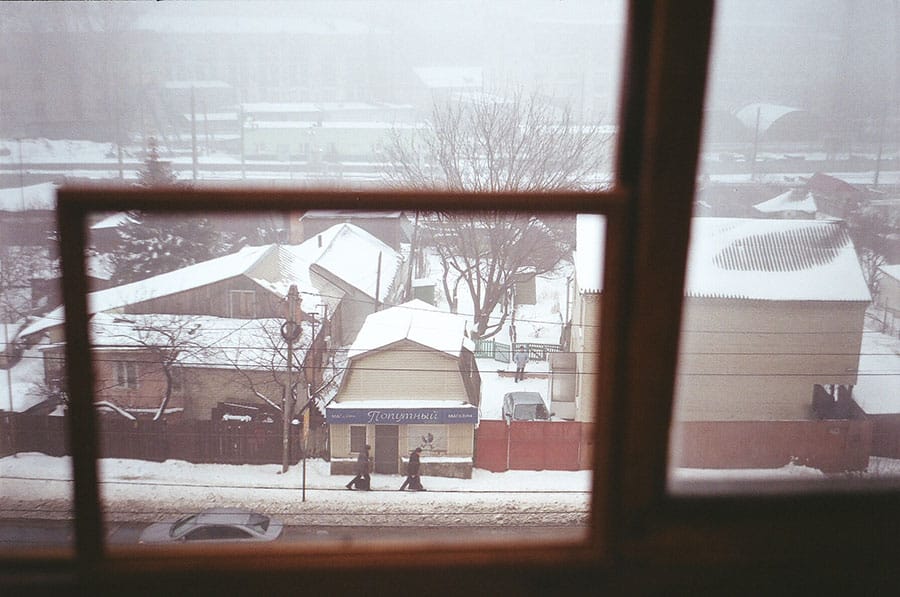
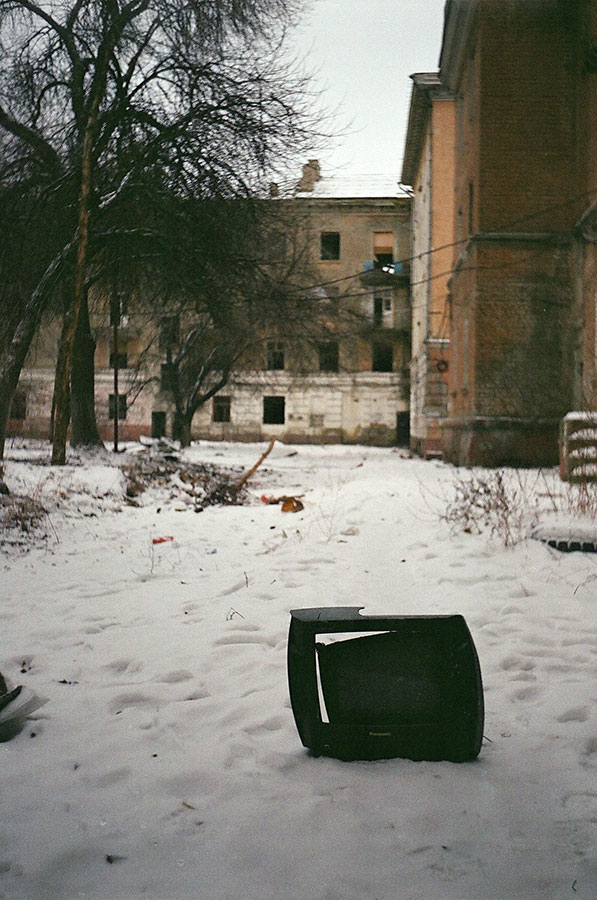
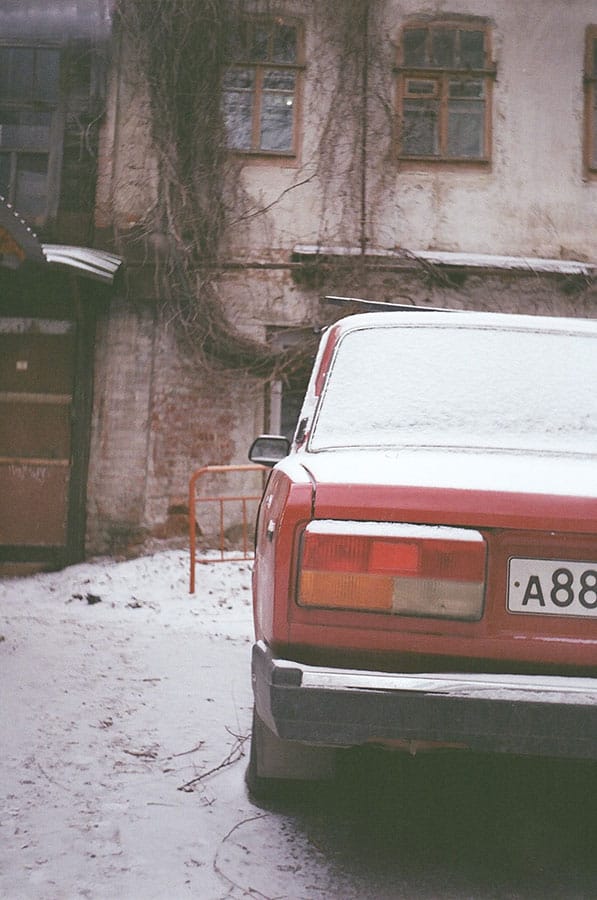
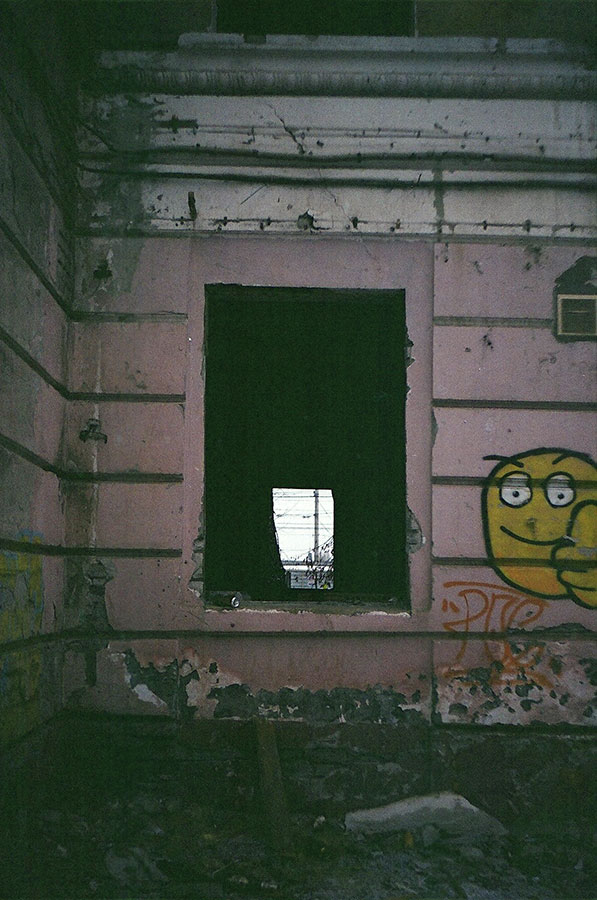
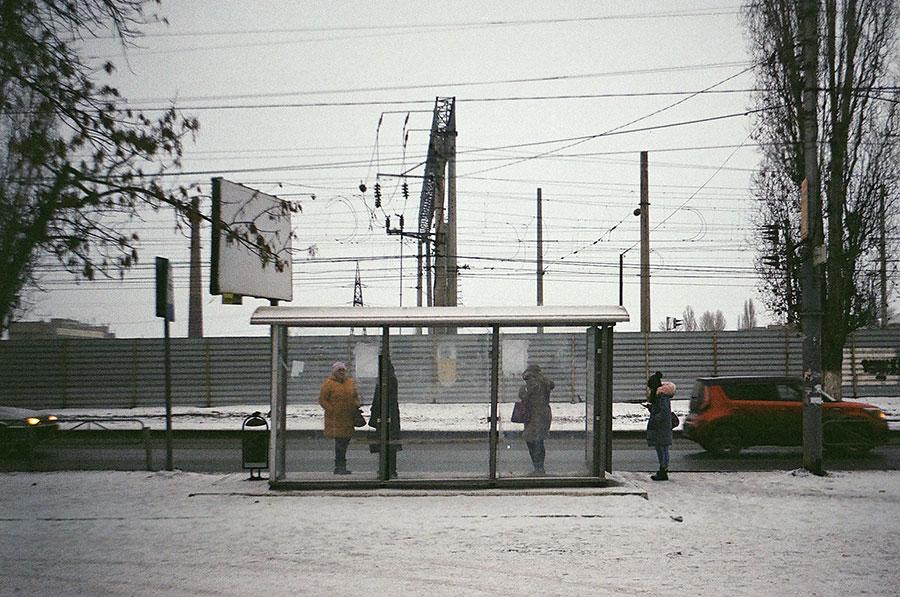
SMENA-1 Sample PHOTOS