

Zenit Cameras
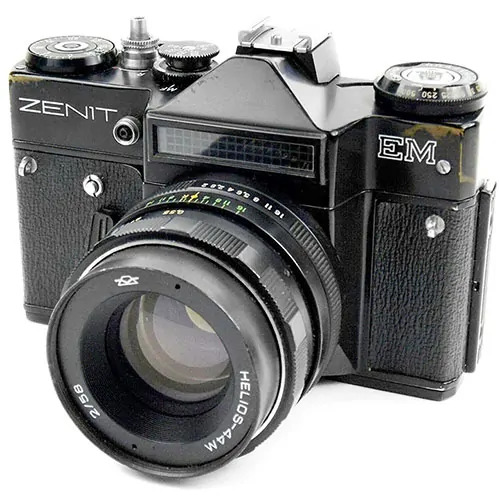
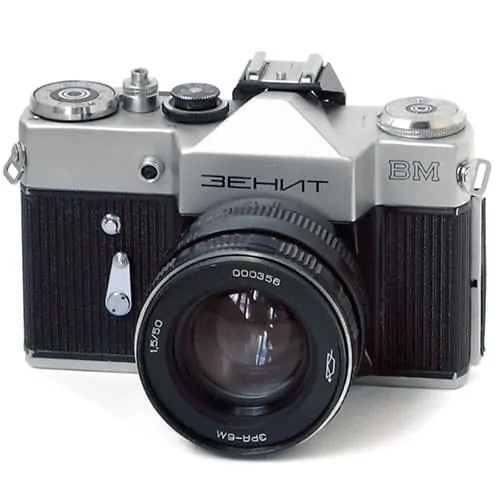
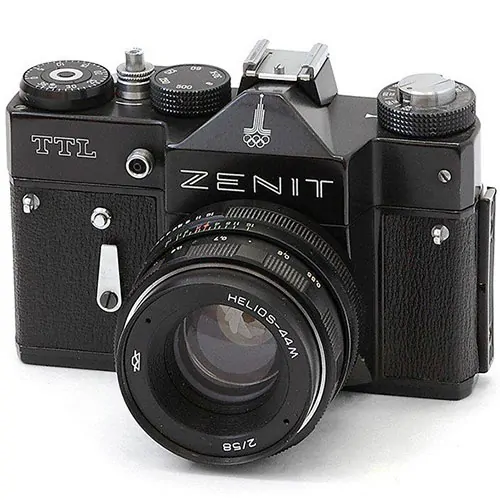
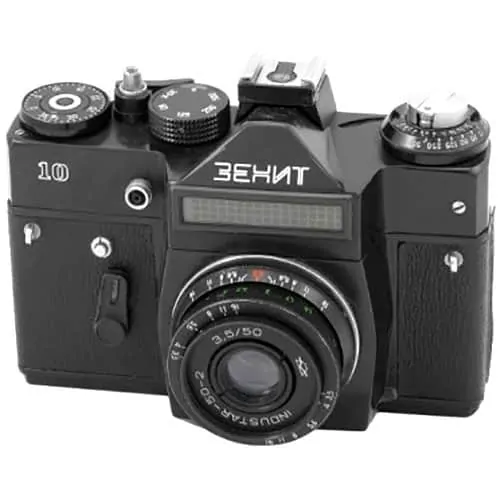
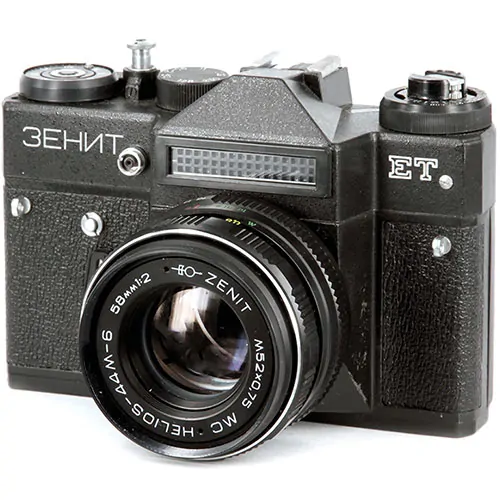
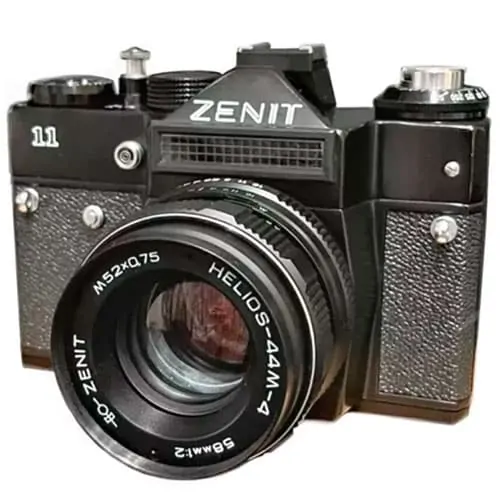
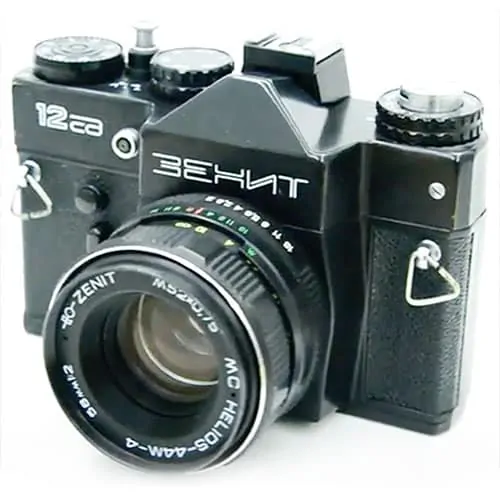
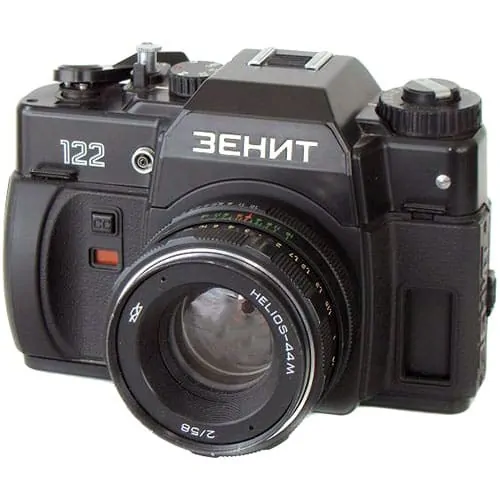
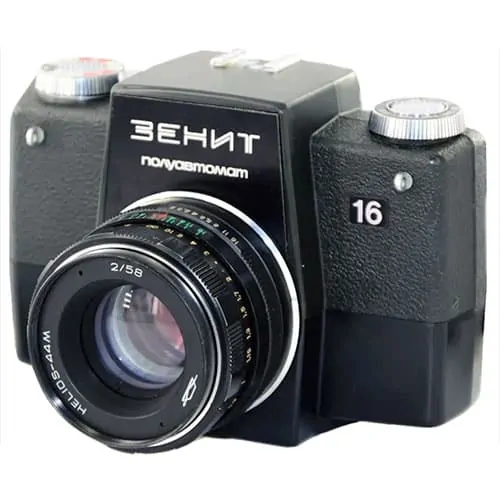
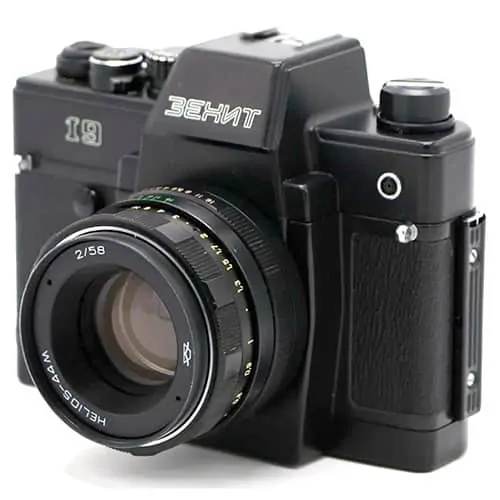
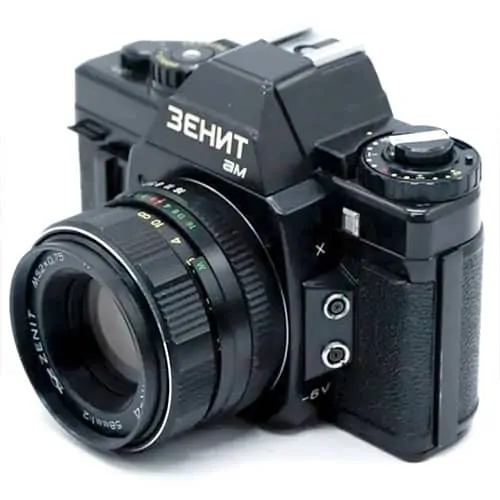
Zenit Cameras Overview
Zenit cameras were among the most popular SLR cameras in the Soviet Union. For many photographers, owning a Zenit was a common aspiration, as these cameras offered acceptable image quality by Soviet standards and provided access to full manual photography without excessive complexity.
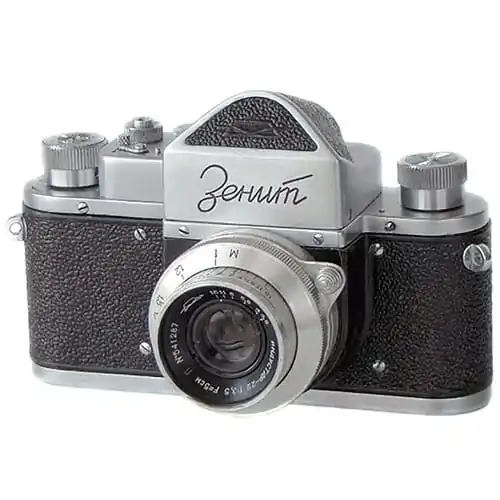
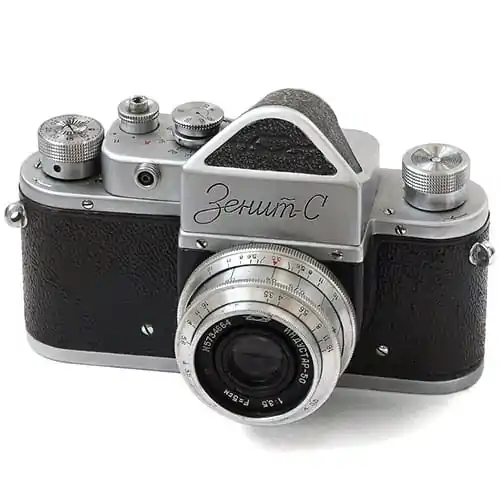
Unlike rangefinder cameras such as FED or Zorki, Zenit cameras allowed photographers to see the image exactly as it would appear in the final photograph. The very first Zenit models – the original Zenit and Zenit-C – were based on Leica-derived designs, with the addition of a reflex mirror mechanism.
Over the years, KMZ continued to produce essentially the same camera while introducing small, incremental changes. Each of these changes was often enough to justify a new model index, resulting in a long and sometimes confusing lineup.
Many photographers consider the earliest Zenit models to be the most solid in terms of overall build quality. Beginning with the Zenit-E, manufacturing consistency gradually declined, and by the 1990s little remained of the build quality seen in the early models of the 1950s.
There were also attempts to create more advanced and technically complex cameras for professional use by Soviet standards. However, models such as the Start, Zenit Automat, and Zenit AM failed to gain widespread popularity, largely due to their high cost and inconsistent quality.
Despite these shortcomings, Zenit cameras became a true symbol of the Soviet photographic industry. For many years, they were used both by amateur photographers and, in some cases, by professionals across the Soviet Union.
Today, Zenit cameras remain one of the most accessible ways to become familiar with film photography. They are inexpensive, fully mechanical, and offer all the basic functions needed to work with film. In addition, many Zenit cameras were supplied with interesting lenses that continue to be useful even in modern digital photography.
Origins and History of Zenit Cameras
The history of Zenit cameras begins with the Zorki rangefinder cameras, whose own history, in turn, traces back to German Leica cameras.
In the 1950s, as the Soviet photographic industry was developing rapidly, the number of professional and amateur photographers was growing, and photographic tasks were becoming more diverse and demanding.
This created a need for a mass-market SLR camera that would still offer solid technical capabilities. Earlier attempts to create SLR cameras had existed, but they did not achieve wide adoption.
The very first Zenit became a breakthrough in this area because, instead of designing an entirely new camera from scratch, engineers converted the original Zorki camera by integrating a reflex mirror system in place of the rangefinder.
In most other respects, the camera remained largely unchanged, retaining its body shape, shutter design, film loading method, and even the thread mount, albeit adapted for SLR use.
Zenit cameras then evolved relatively quickly, with new versions introducing incremental rather than radical changes.
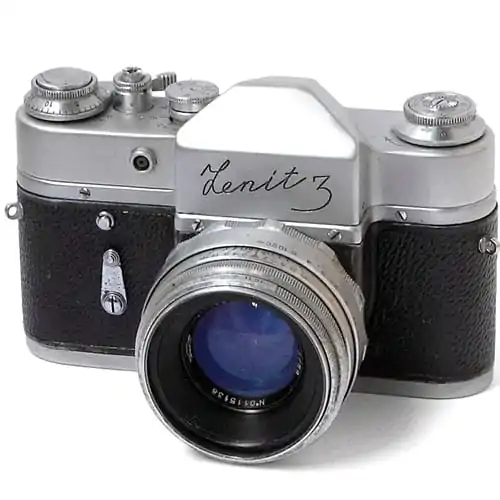
The updated Zenit-C added flash synchronization, while the Zenit-3 introduced a lever-type shutter cocking mechanism instead of a knob.
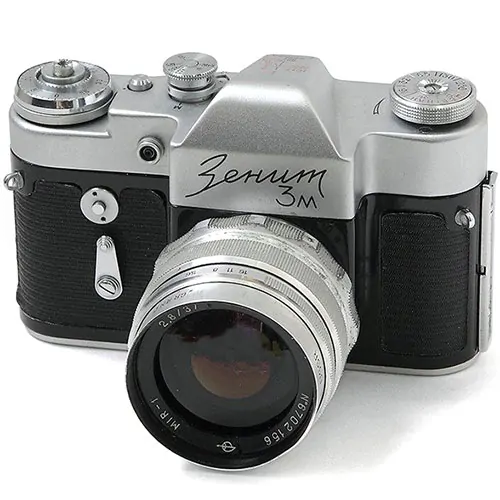
With the Zenit-3M, a hinged back door was added, greatly simplifying film loading, and the mirror lifting mechanism was revised, although the mirror itself was still non-returning.
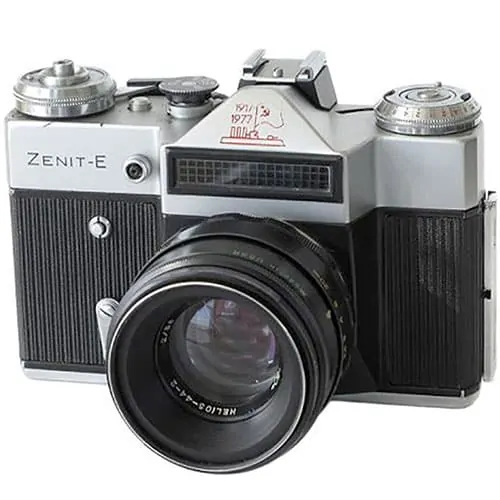
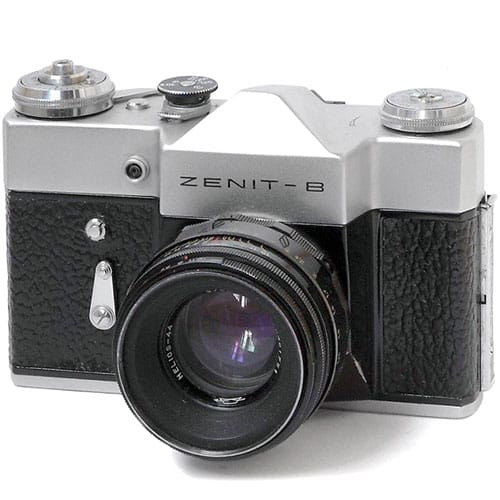
The Zenit-E introduced more substantial improvements, including a return mirror, a selenium exposure meter, a more convenient and widely adopted M42 mount, and a number of smaller refinements.
The Zenit-E was produced in many different versions and modifications, some featuring automatic diaphragm actuation, various exposure meter configurations, and more convenient controls for shutter speeds and film rewind.
Another major milestone in the Zenit lineup was the Zenit-TTL, which introduced a coupled TTL exposure meter. Most later Zenit models were equipped with this type of metering system.
By the late 1980s, Zenit cameras began to incorporate more electronics and automatic features. The peak of automation came with models such as the Zenit-Automat and Zenit-AM-2 – fully automatic cameras with aperture priority but without manual shutter speed control.
Zenit cameras continued to be produced for some time after the collapse of the Soviet Union, though not for long. They quickly lost competitiveness in the post-Soviet market, overwhelmed by inexpensive point-and-shoot cameras from Asia as well as professional systems from Canon, Nikon, Pentax, and other manufacturers.
Positioning and target audience
Despite the fact that Zenit cameras were produced over many decades and in very large numbers – with a wide variation in features – their target audience remained largely unchanged, with only rare exceptions.
Zenit cameras were not aimed at complete beginners, nor were they intended for professional photographers. Instead, they were designed for the broad group of serious amateur users.
The vast majority of Zenit cameras offered a limited but sufficient set of features that covered most photographic needs.
With few exceptions, most Zenit models were equipped with relatively simple shutters offering speeds from 1/30 to 1/500 second.
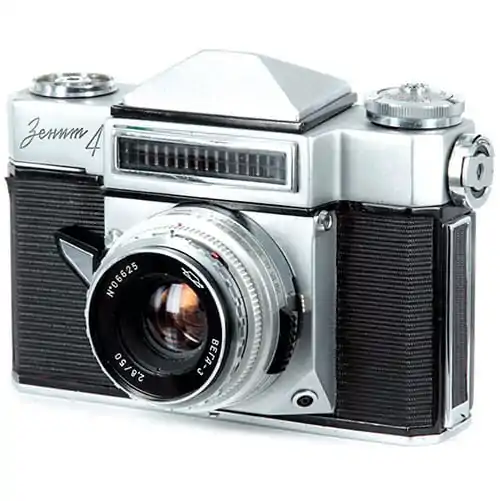
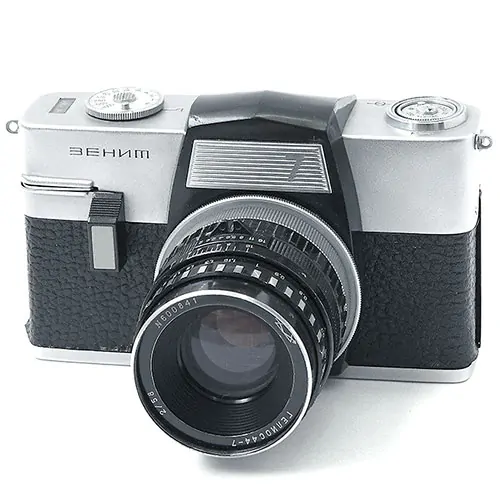
Notable exceptions included models such as the Zenit-4 through Zenit-7, which were more experimental in nature, as well as the much later Zenit Automat cameras, which used a fundamentally different operating concept.
In terms of positioning, Zenit cameras occupied a niche above the Smena cameras, but slightly below Kiev SLR cameras, which offered somewhat more advanced specifications.
Most Zenit cameras – again, with a few exceptions and the very late models – were produced first with the M39 mount and later with the M42 mount.
The standard lenses for these cameras were almost always various versions of Helios and Industar lenses.
One of the key advantages of many Zenit cameras is the enormous range of lenses produced for them, covering a wide variety of focal lengths and maximum apertures.
This extensive lens ecosystem remains one of the strongest and most appealing aspects of the Zenit system even today.