The Best Soviet Rangefinder Cameras
A large number of rangefinder cameras were produced in the territory of the former USSR, but in this article we will focus on the best Soviet rangefinder cameras, and also explain which of them may be the best choice for you.
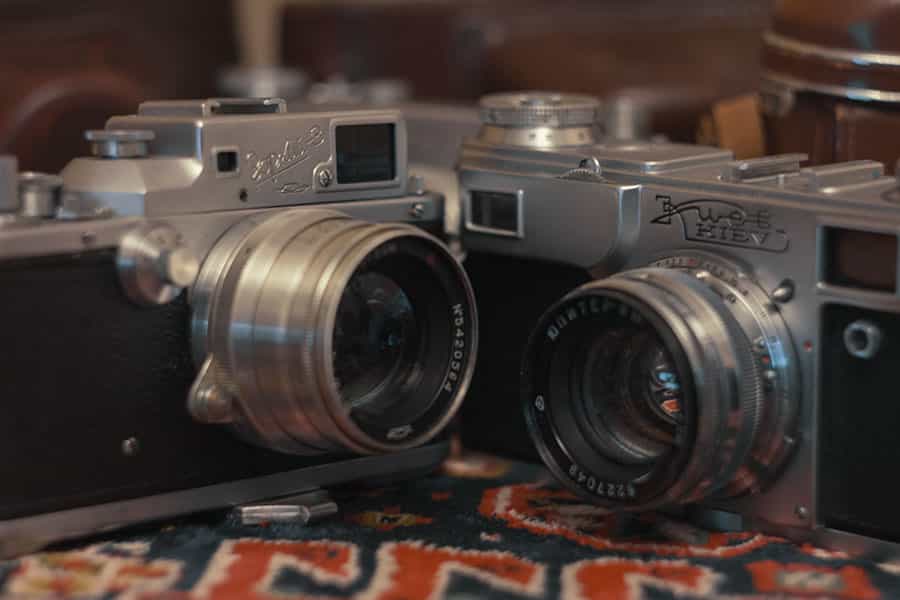
In Soviet times, a huge number of rangefinder cameras were created, and among such a variety it is easy to get confused, and therefore today we decided to tell you about what is the best Soviet rangefinder camera.
We want to immediately draw your attention to the fact that almost all Soviet rangefinder cameras were clones of German or Japanese originals, and those that were not clones or reparations products were most likely cameras of very low quality.
What is a Rangefinder Camera
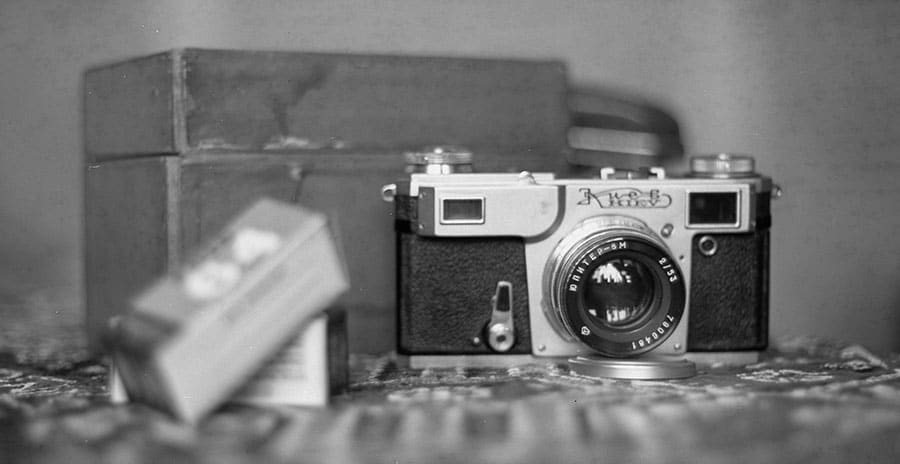
A rangefinder camera is a type of camera that uses an optical rangefinder for focusing, which works on the principle of optical parallax.
Optical rangefinders have been used for focusing since the beginning of the 20th century, but this method of focusing gained popularity with the help of Leicas.
Further, thanks to countless clones and imitations, cameras with a rangefinder focusing system gained unprecedented popularity until they were supplanted by more convenient SLR cameras.
Available Options
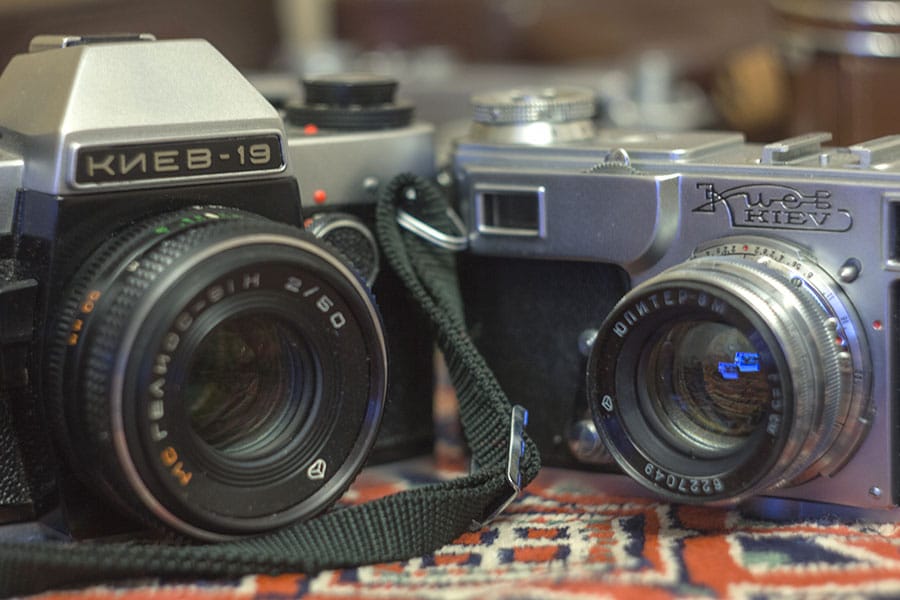
As mentioned above, a huge number of rangefinder cameras were created in Soviet times. Here we will not consider all the variations that were produced, since many of them are of too poor quality and others cannot be bought in our time.
Among the factories that produced Soviet rangefinders, it is worth stopping at three, and these are:
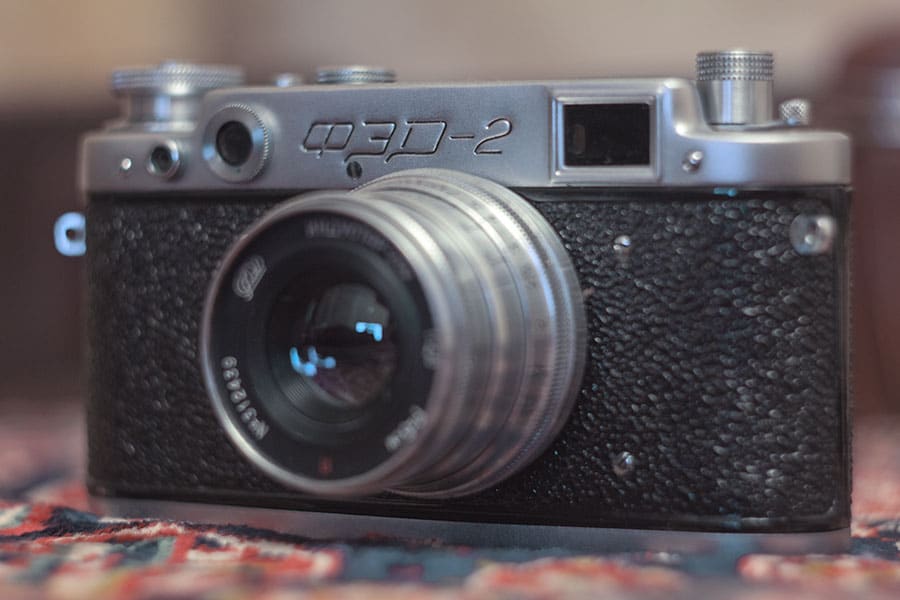
The FED plant produced cameras called FED, which were originally clones of the German Leicas and later with each new model became less and less similar to the German original.
The main advantage of FED cameras was that they were relatively cheap, but at the same time they had the whole set of characteristics for convenient photography and made it possible to get decent pictures.
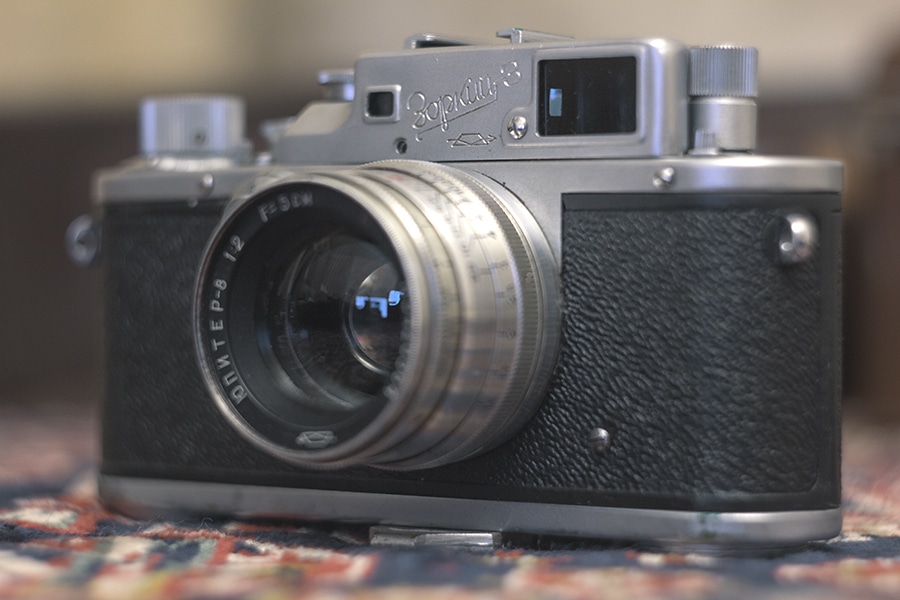
The KMZ plant produced Soviet rangefinder cameras known as Zorki, which were also clones of German Leica cameras. Like FED cameras, with each new model they became less and less similar to the original Leica designs.
The main advantage of Zorki cameras was slightly better build quality compared to FEDs, and in some models, marginally improved specifications.
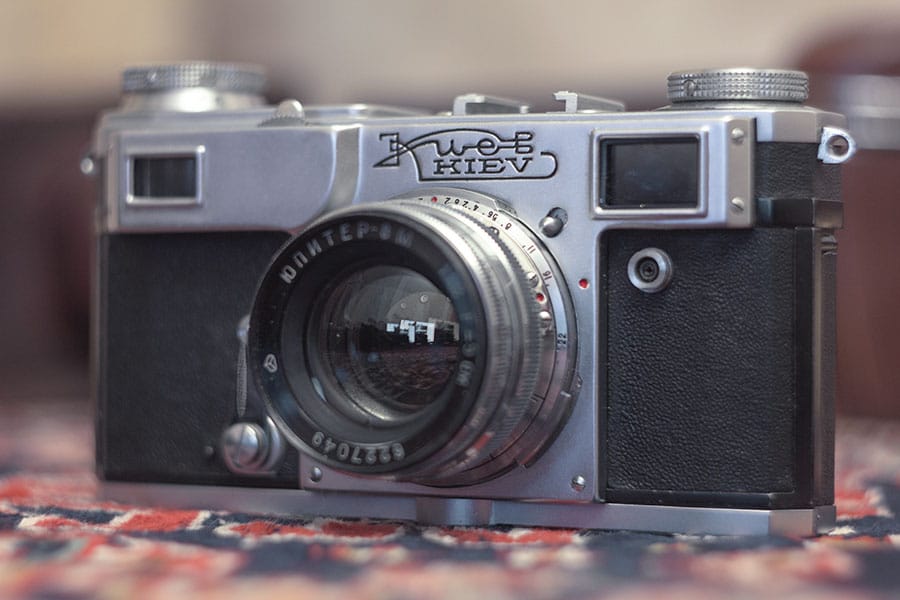
The Arsenal plant produced cameras known as Kiev. These were essentially Contax cameras, assembled in the USSR on original Zeiss equipment with the participation of German specialists from the Zeiss factory.
Kiev cameras offered noticeably better specifications and higher build quality, but were also significantly more expensive than FED and Zorki cameras.
What is The Best Soviet Rangefinder Cmera
For shooting, we can recommend two options, these are Zorki 4k and early versions of Kiev rangefinder cameras. Both of these options have a fairly good range of shutter speeds, a good rangefinder base, decent build quality and a good set of lenses.
Let’s look at these options in more detail.
Zorki 4k
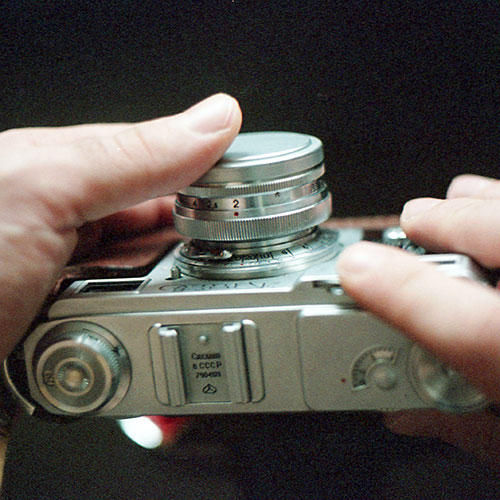
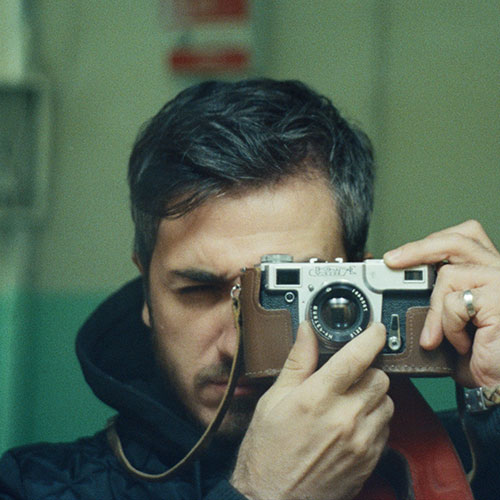
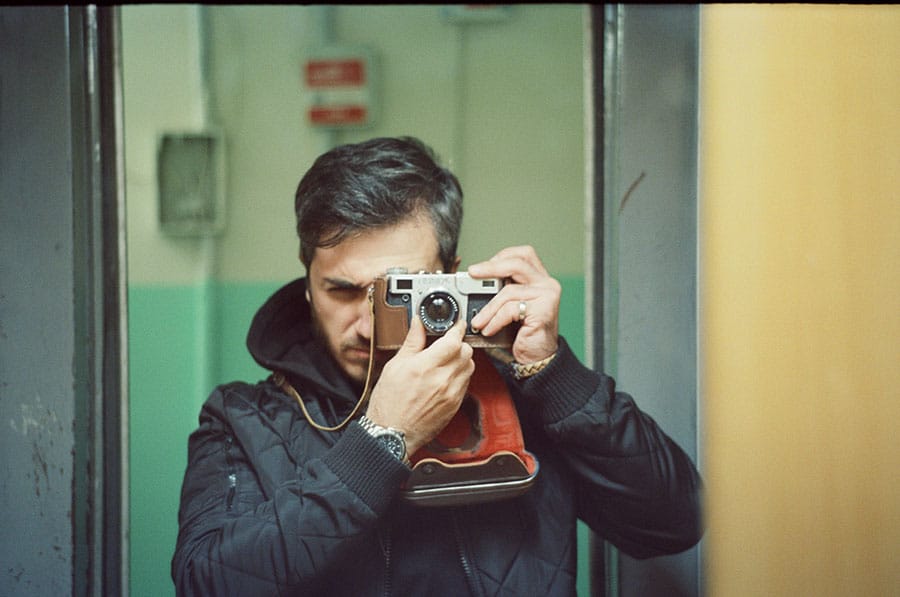
Zorki-4K is one of the best Soviet film cameras. This model stands out as the most convenient among all rangefinder cameras produced at the KMZ plant.
The Zorki-4K has a relatively long rangefinder base, which allows for more accurate focusing. Its viewfinder is very large and clear, further improving ease of use.
The camera is equipped with a shutter offering speeds from 1 to 1/1000 second. It uses the M39 rangefinder mount, for which a large number of lenses were produced during the Soviet era. In addition, the Zorki-4K is a very affordable Soviet camera.


Kiev Rangefinder Cameras
Kiev rangefinders, as mentioned above, are essentially Soviet Contax cameras, with all the corresponding advantages.
The rangefinder base on Kiev cameras is one of the longest among all cameras ever produced, which makes focusing extremely precise and comfortable.
In addition, Kiev cameras feature a fairly large and clear viewfinder with a bright central focusing patch. The build quality of early models is by far the best among all Soviet cameras.
The range of lenses available for Kiev differs little from what was offered for Zorki cameras. The main difference is the unusual mount, but in practice it does not cause any inconvenience.
Other Notable Soviet Rangefinder Film Cameras
Above, we listed two Soviet film rangefinder cameras that we consider the best and that we personally use on a regular basis in our professional work.
These cameras are well suited for most of our readers, from beginners just starting their path in film photography to experienced professionals.
However, over many decades the Soviet industry produced a vast number of other rangefinder cameras that may be slightly inferior to the top models listed above, but not by much, and can also be of interest to those who are looking for somewhat different options.
- Early FED or Zorki models – very close clones of the original Leica cameras, with nearly identical bodies, control layouts, and lenses. They are an excellent choice for those who want the experience of classic Leica cameras at the lowest possible cost.
- FED-2 – one of the most successful cameras in this family. It still retains many similarities to the earliest Leica cameras, but adds a hinged back for easier film loading, a combined rangefinder and viewfinder, and a number of small yet very practical improvements.
- Zorki-4 – the non-lever version of the Zorki-4K. It offers essentially the same features as the more refined and convenient 4K, but uses a shutter-winding knob instead of a lever.
Conclusion
Rangefinder camera production in the Soviet Union was put on a mass scale, and in many ways it was with rangefinders that full-scale camera production in the USSR truly began.
To summarize what has been said above, both the Zorki-4K and the Kiev rangefinder cameras offer almost the complete set of features needed for analog photography. No batteries, no dependence on electricity – purely manual mechanical operation, while still providing all the essential functions.
Other cameras may offer slightly fewer features or have certain characteristics that are worth taking into account. In any case, a camera is always chosen based on your personal needs and level of experience. We hope this article has helped you understand the topic better and choose the option that suits you best.