

Helios Lenses
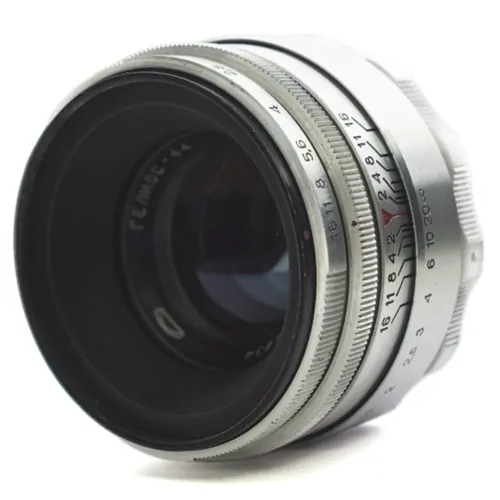
Helios Lenses Overview
The Helios lenses are an entire line of lenses, predominantly standard primes, that are clones of the Carl Zeiss Biotar.
By recreating this legendary optical formula in the Soviet Union using Soviet manufacturing equipment, USSR engineers were able in many ways to replicate and even build upon the success of the German original.
Nearly all lenses bearing the Helios name are united by their distinctive rendering, featuring soft and smooth sharpness, characteristic background blur with a recognizable swirling bokeh, and oval highlights in out-of-focus areas.
Helios lenses began production in the 1950s and continued through the 1990s. Over these decades, numerous versions and modifications were created, with new features being added over time, and sometimes elements being removed to reduce costs or simplify production.
The Helios lens lineup includes versions for Zenit SLR cameras with M39 and M42 mounts, Start cameras with a unique bayonet mount, bayonet versions for Nikon and Pentax, as well as many fixed-lens variants.
Origins and History of Helios Lenses
After the Second World War, there arose an urgent need to expand the production of photographic equipment to meet the growing consumer demand.
For this purpose, a large number of 35 mm and medium-format cameras were produced, including rangefinder and scale-focus models, as well as SLR cameras developed for both professionals and enthusiasts.
It was specifically for the latter categories that the Biotar 58 mm f/2 lens was taken as a basis and recalculated for Soviet glass.
The very first camera for which the Helios-44 was developed was the advanced-for-its-time professional Start camera, which featured many modern technologies.
A slightly modified and somewhat simplified version with an M39 thread mount was then developed for the very first Zenit cameras, and later for the Zenit-3 and Zenit-3M. These lenses used a non-standard thread and were compatible only with Zenit cameras of that period, as well as with the Start camera via an adapter.
To achieve greater unification with other Soviet SLR cameras, the more common M42 thread mount was introduced, and all popular lenses for the Zenit M39 mount were redesigned to use it.
This led to the appearance of the legendary Helios-44-2, followed by later versions with automatic diaphragms, such as the 44M and subsequent models.
To broaden the audience and enter wider international markets, it was also decided to produce Helios lenses for popular systems of the time, such as the Helios-44K-4 for Pentax cameras and the Helios-81N for Nikon cameras.
By order of the Soviet Union, Helios lenses continued to use the same optical scheme as in the early 1950s, albeit with numerous improvements and refinements.
Later Helios lenses combined both advantages and enhancements – such as increased sharpness and improved usability – with certain simplifications, including a reduction of the diaphragm blade count to six and less effective internal blackening.
Optical Performance
Over the long years of Helios lens production, many small and more noticeable changes were made to the barrel design and coatings, while the optical formula itself remained unchanged.
Because of this, nearly all Helios lenses – from the earliest to the latest versions – produce a very similar image.
All Helios lenses are quite sharp in the center of the frame even wide open at f/2, with slight softness toward the edges. When stopped down to at least f/4–f/5.6, sharpness increases significantly and becomes very respectable even across the frame.
Color rendering varies noticeably between different versions and depends on production period, coating type, and a number of other factors.
Contrast, while not extreme, is sufficient for most photographic tasks and tends to drop when direct or side sunlight enters the lens.
The most distinctive characteristic of all Helios lenses is their signature swirling bokeh, which is most pronounced at f/2 and gradually diminishes as the aperture is stopped down.
Optical performance can vary considerably from one sample to another, but the vast majority deliver a very solid – and, most importantly, interesting and charismatic – image.
Classification
From the 1950s through the 1990s, Helios lenses were produced at several factories and for multiple camera systems. Among the plants that manufactured Helios lenses were KMZ, MMZ / BelOMO, the Valdai Jupiter Plant, and Arsenal.
The Arsenal factory, as the manufacturer of Kiev cameras, produced Helios lenses for both SLR and rangefinder Kiev systems, including the Helios-81N and Helios-103. KMZ, MMZ, and BelOMO primarily produced Helios lenses for Zenit cameras, as well as for less common systems such as Start, Kristall, Zenit-Automat, and Zenit-AM.
In our opinion, the highest overall build quality is most often found in Helios lenses produced at KMZ and Arsenal.
This does not mean that lenses manufactured at MMZ or the Valdai Jupiter Plant were of low quality. Based on the hundreds of Helios lenses that have passed through our hands, the variation in quality is more closely related to individual samples and how they were assembled, used, and stored rather than to the factory itself.
Quality control at Soviet factories was not always consistent. Toward the end of production cycles, when factories were often required to catch up on delays or exceed planned output targets, production volumes could increase while quality declined.
In addition, many lenses were heavily used and frequently stored in poor conditions. These factors have a much greater impact on the condition and performance of a Helios lens than the specific factory where it was produced.